Wellbeing project for people with brain injuries adapted to support students and adopted across Wales
A wellbeing initiative developed in Swansea Bay for people with brain injuries, which was adopted across Wales, is now being used to support the mental health of students.
Developed in partnership with Swansea University, it helps chronic conditions like acquired brain injury (ABI), which is one of the most common neurological conditions in the UK, affecting more than a million people.
Now it has also been adapted for another seemingly disparate group; university students, following a tripling of the proportion of undergraduates experiencing mental health difficulty in recent years.
Rather than focusing on symptom reduction, this approach focuses on providing supportive interventions that build wellbeing and resilience.
Dr Zoe Fisher, clinical lead Emotional and Mental Wellbeing Strategy, said: “Despite strong evidence, wellbeing science remains poorly
connected to practice. Traditional models have prioritised treatment and deficit reduction, but research, lived experience, and policy all highlight the value of holistic, proactive approaches and emotional, social, and environmental interventions.
“University students and people with ABI may seem very different, but both highlight similar challenges; emotional wellbeing and mental health services are stretched by growing demand, remain largely reactive and deficit focused, with less emphasis on prevention and long-term wellbeing”.
“Over the past eight years, we have developed both the theoretical framework underpinning the intervention and the intervention itself, because existing models of care focused on risk and deficit are becoming unsustainable as demand rises. A shift is needed towards approaches that actively build wellbeing, giving people the skills to adapt, self-manage, and flourish.”
Advances in acute care mean more people now survive ABI, but many live with long-term difficulties.
Meanwhile, in the Swansea Bay region students highlight academic pressure, financial strain, loneliness, and poor housing as major stressors, with the cost-of-living crisis now the most pressing concern.
The new approach was shaped by clinicians and academic research to address real-life challenges.
It focuses on topics including living with difficult emotions, identifying and using personal strengths, building positive emotions, understanding the connection between body and mind, connecting with other people and with nature, finding meaning and purpose, translating values into everyday action, and learning how to manage ups and downs over time.
People taking part are encouraged to learn together, share experiences, and feel connected to each other in a group setting.
In healthcare, the programme was delivered and evaluated across several health boards in Wales, including Swansea Bay, Hywel Dda, Cardiff and Vale, and Betsi Cadwaladr health board, where clinical teams in each area delivered the programme locally.
It was also delivered within Swansea University, where student concerns include a reliance on crisis response, with particular risks for those with pre-existing difficulties such as ADHD, trauma, or a history of self-harm.
The programme was integrated into a wellbeing science module for undergraduate psychology students. Evaluation showed significant improvements in student wellbeing and the team are now exploring how to broaden access to this course across the university with student services.
Andrew Kemp of Swansea University said: “There is a huge issue with student well-being, not just in Swansea but everywhere.
“What we’ve done is to bring the well-science to people by integrating techniques that students can practice themselves. As part of their course work they were invited to practise those interventions, such as mediation, and record the effect it had on them.
“We have been able to show how it has improved student well-being significantly just taking part in this lecture compared to people in other in other lectures.”
Kelly Davies (PhD researcher) added: Across both healthcare and education settings, people taking part reported clear benefits to their wellbeing, and in doing so has shown it could be adapted to further settings while keeping its core approach."
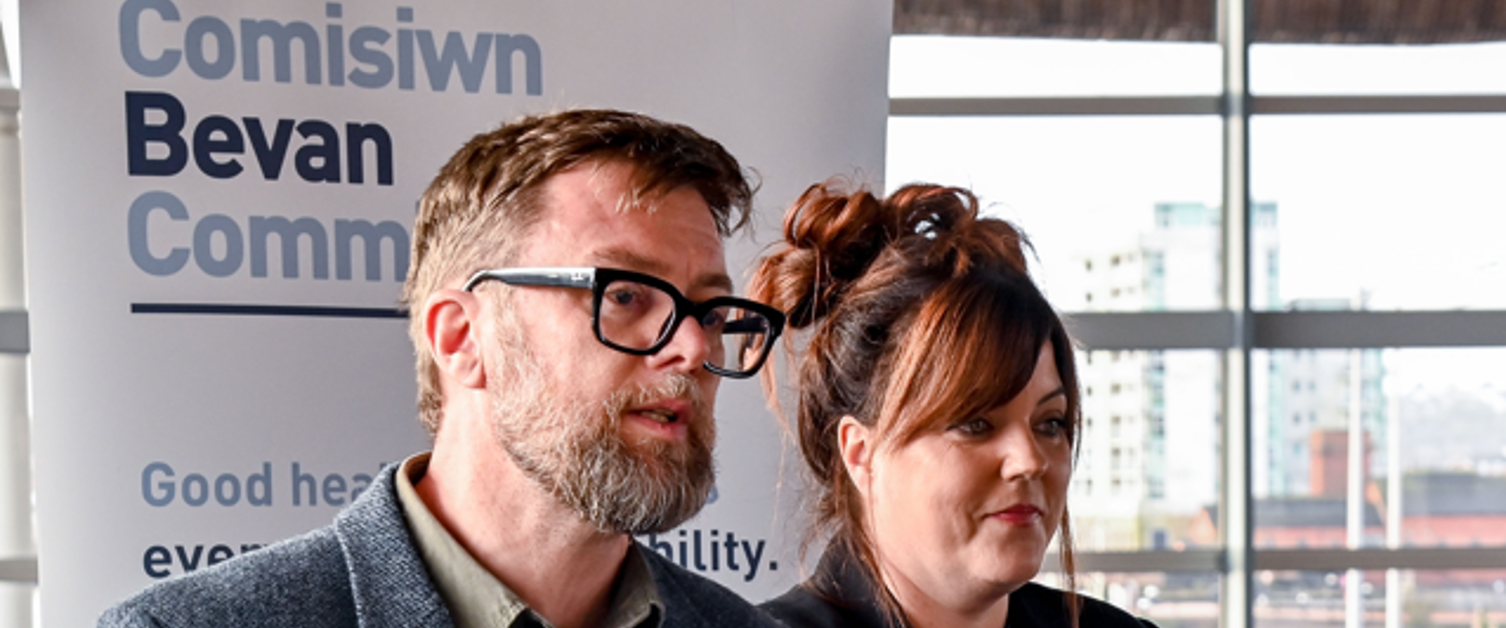
Entitled ‘Reimagining Holistic Health: Scalable Interventions for Living Well with Chronic Conditions’, the project has been so successful it has been selected as one of the Bevan Commission’s Exemplars Programme, which highlights how health and care professionals are transforming innovative ideas into real-world solutions, enhancing patient care and improving outcomes.
Brain Injury Service and Regional Neuropsychology Service project manager Suzanna Charles said: “Our patients have been closely involved throughout the development of this programme. The work came directly from them telling us they needed something different.
“They identified which sessions mattered most to them, and their stories and contributions are woven through the manuals. Alongside this, we worked with our patients and the third sector organisation Re wise to produce a series of digital resources demonstrating evidence-based wellbeing techniques, supporting people to practise and embed these skills outside the group and lecture setting.
“We will be publishing a book featuring our clinical manual this year, making the intervention accessible internationally”.
Rydym yn croesawu gohebiaeth a galwadau ffôn yn y Gymraeg neu'r Saesneg. Atebir gohebiaeth Gymraeg yn y Gymraeg, ac ni fydd hyn yn arwain at oedi. Mae’r dudalen hon ar gael yn Gymraeg drwy bwyso’r botwm ar y dde ar frig y dudalen.
We welcome correspondence and telephone calls in Welsh or English. Welsh language correspondence will be replied to in Welsh, and this will not lead to a delay. This page is available in Welsh by clicking ‘Cymraeg’ at the top right of this page.