Celebrating International Clinical Trials Day 2026
Patients in their thousands from across Swansea Bay are helping to maintain a tradition dating back more than 250 years.
Today, Wednesday 20th May, is International Clinical Trials Day, an opportunity to recognise all that has been achieved thanks to clinical trials and research generally – as well as the people behind them.
Swansea Bay is proud of its track record in research and development, and the dedicated teams and individuals involved.
Whenever new treatments and cures are found, it’s thanks to them and their R&D colleagues around the world – and of course, the patients who volunteer to participate.
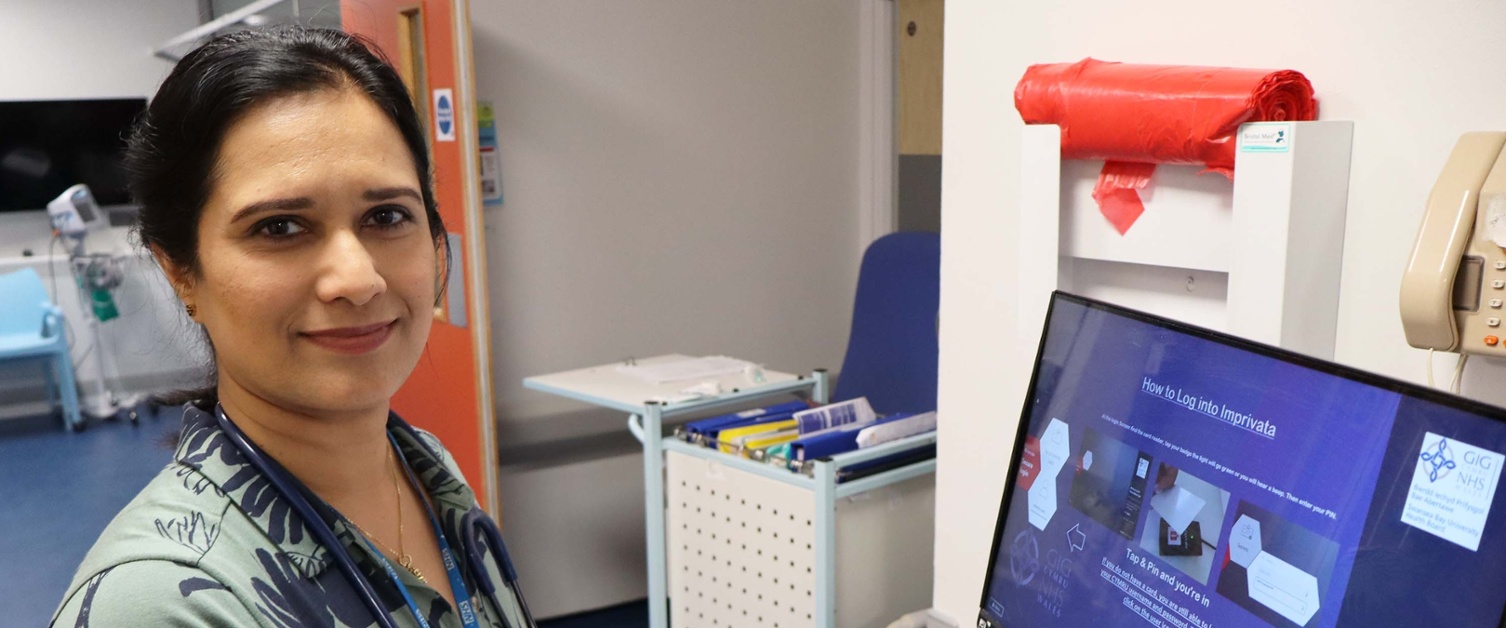
(Main image above - Dr Manju Krishnan)
During 2025-26 alone, Swansea Bay’s research portfolio listed 161 non-commercial studies and 20 commercial. Between them they attracted 2,380 people.
International Clinical Trials Day falls on May 20th as this was the date in 1774 that Royal Navy ship’s surgeon James Lind started what is regarded as the first randomised clinical trial. It studied the effects of different treatments on scurvy in sailors.
Today, Swansea Bay’s research covers a much wider range of conditions, including cancer, diabetes, mental health, neurology, renal, respiratory, and stroke, along with numerous others.
The health board has a dedicated research delivery team. Funded by Health and Care Research Wales, the team provides the expertise required to ensure the trials run smoothly.
It also has an oncology trials unit, the South West Wales Cancer Institute, as well as a Joint Clinical Research Facility.
This bespoke facility, located in the Institute of Life Sciences at Singleton Hospital and at Morriston Hospital, is run jointly by the health board and Swansea University.
Some of the work publicised over the last year include:
- The South West Wales Cancer Institute at Singleton Hospital joined the Rosalind study. This focuses on “super-survivors” who defied the odds after being diagnosed with aggressive cancers – with the hope being that this will lead to more effective treatments in future.
- The Institute was also the first site in Wales to join the UK-wide SCC-AFTER trial, focusing on radiotherapy treatment for Squamous Cell Cancer, the UK’s second most common form of non-melanoma skin cancer.
- Also at Singleton, the South West Wales Cancer Centre secured investment of more than £450,000 to boost its research infrastructure by creating new roles and medical leadership.
- Swansea Bay’s Rehabilitation Engineering Unit at Morriston Hospital, meanwhile, has been active in the STEP II trial, which uses an electrical device to improve the mobility and reduce the risk of falls in people with Parkinson’s.
- Morriston’s Welsh Centre for Emergency Medicine Research, in partnership with Swansea University and Massachusetts Institute of Technology, was awarded £1.2 million to create a blood test for more effective treatment of conditions such as stroke.
- An international clinical trial, SOUL, led in the UK by Swansea’s Joint Clinical Research Facility, found that semaglutide, an active ingredient in some weight loss treatments, can help significantly reduce the risk of heart attacks in adults with type 2 diabetes and certain other conditions.
- Also in 2025-26, stroke consultant Dr Manju Krishnan received the Local Clinical Research Investigator Award from the British and Irish Association of Stroke Physicians. Dr Krishnan has been principal investigator on several national and international trials, involving patients at Morriston Hospital where she is based.
Health board Research and Development Manager Jemma Rogers said: “We’re really pleased to be celebrating International Clinical Trials Day alongside all NHS clinical trial colleagues on May 20th.
“It’s really important to thank staff working across the health board who dedicate time to supporting clinical trials, either as part of our core research infrastructure teams or from within the direct care teams.
 “They show a great deal of passion and commitment, supporting patients access potential treatment benefit from clinical trial opportunities, acknowledging research can be embedded into treatment pathways.
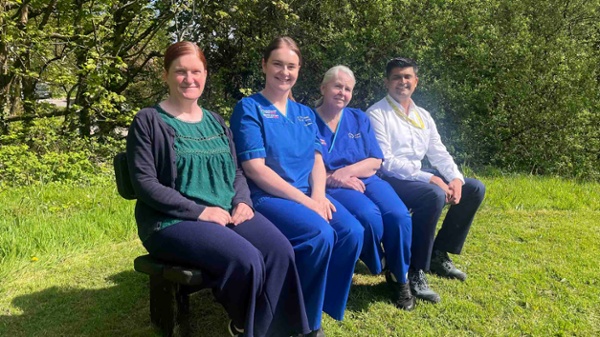
(Left: The Rosalind study team, l-r: research facilitator Nicola Lemon, research nurses Rebecca Griffiths and Esther Reeves, and specialist grade oncologist Prashanth Kainthaje Bhat)
“We must also thank the patients who give their consent to join a clinical trial programme, often committing to additional visits and sharing their data, anonymously, to help answer important clinical questions.”
Next month, Swansea Bay is joining the national patient survey to understand in more detail the patient journey and to use this information to further enhance their experience.
Jemma added: “In the coming months, we are also due to approve a new three-year Research and Innovation Strategy.
“This places research, development and innovation as part of the health board’s quality agenda.
“It includes working with colleagues from Hywel Dda University Health Board to understand how trial opportunities can be opened on a regional basis.”
Rydym yn croesawu gohebiaeth a galwadau ffôn yn y Gymraeg neu'r Saesneg. Atebir gohebiaeth Gymraeg yn y Gymraeg, ac ni fydd hyn yn arwain at oedi. Mae’r dudalen hon ar gael yn Gymraeg drwy bwyso’r botwm ar y dde ar frig y dudalen.
We welcome correspondence and telephone calls in Welsh or English. Welsh language correspondence will be replied to in Welsh, and this will not lead to a delay. This page is available in Welsh by clicking ‘Cymraeg’ at the top right of this page.