Cancer care worker who is a shining star for patients wins national award
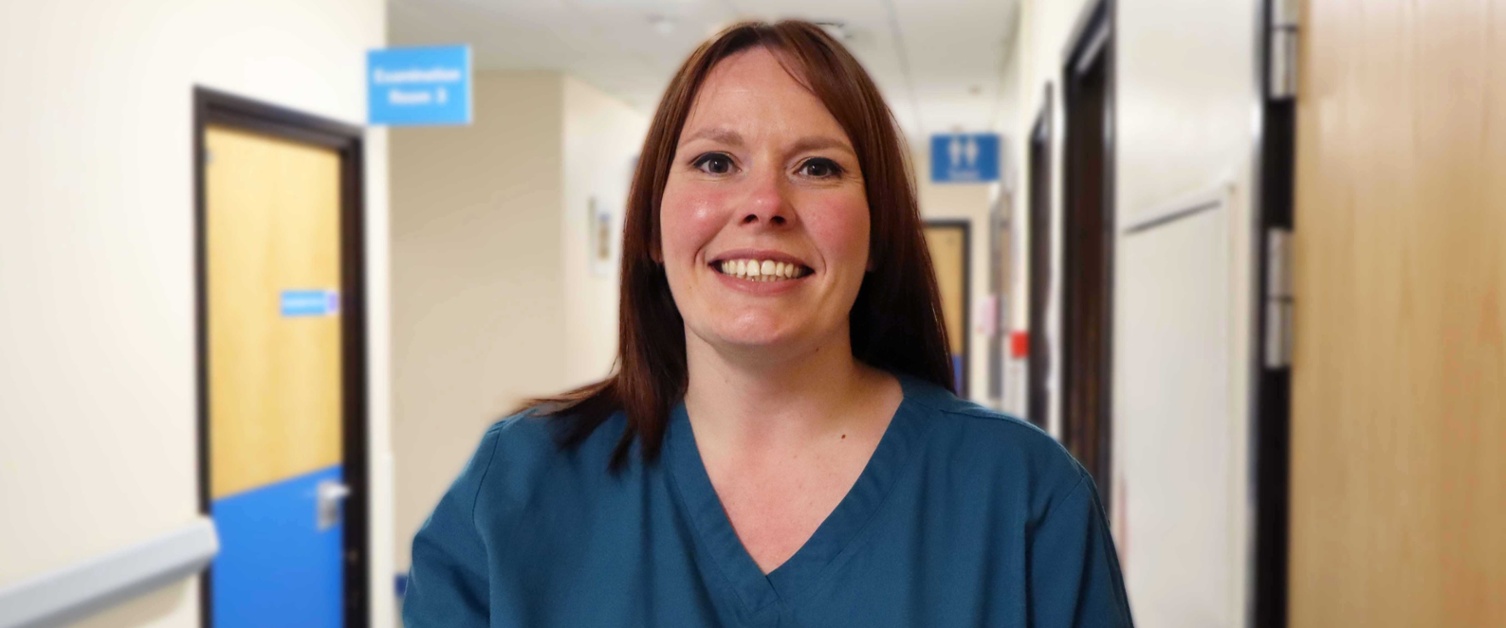
A hospital worker who is a shining star for people with a rare form of cancer has been recognised with a national award.
Lucy Whiddett is the Macmillan sarcoma support worker with Swansea Bay’s regional sarcoma team, based at Morriston Hospital.
Lucy is the first person that patients have contact with when they are referred to the sarcoma service, and she follows them throughout.
Most recently, Lucy helped set up a UK-wide forum so sarcoma support workers can discuss best practice and share ideas.
Now her dedication to her patients and passion for her work have led to her winning the Sarcoma Healthcare Professional Innovation and Excellence Award at Sarcoma UK’s Shining Star awards in London.
“It’s amazing – absolutely amazing,” Lucy said. “I wasn’t expecting to be nominated, and I certainly was not expecting to win.
“It has been really good to have a platform that showcases the sarcoma support worker’s role and the South Wales sarcoma service.”
Sarcoma is an uncommon cancer of the connective tissue of the body such as fat, muscle, nerves, blood vessels and bone. There are many different kinds, which can affect any part of the body.
In South and Mid Wales, people with confirmed or suspected soft tissue sarcoma are supported by the multidisciplinary team (MDT) of the South Wales Sarcoma Service, hosted by Swansea Bay.
The MDT is made up of healthcare staff who specialise in soft tissue sarcoma. These include clinical staff such as surgeons, oncologists, radiologists, pathologists, specialist Macmillan nurses, physiotherapists, as well as the MDT coordinator.
Oncological treatment is delivered in two Welsh cancer centres, Singleton Hospital and Velindre. The surgical team is based at Morriston Hospital.
Lucy joined the Swansea Bay sarcoma service as its first support worker in 2019 as part of a drive to improve standards.
She liaises with the MDT, attends clinics and runs a weekly telephone clinic for people newly referred with suspected sarcomas.
Her role also includes a weekly holistic needs assessment clinic to see if anything else can be done to support individual patients.
A few years after joining the team, Lucy helped developed a digital noticeboard featuring reliable information which can be easily accessed by patients, relatives and carers.
Now she has helped set up the support worker forum. “Sarcoma is rare and is managed by specialised centres across the UK,” she explained. “This means there are only a small number of sarcoma support workers.
“With the support of Sarcoma UK, we set up the forum so that we could come together to share best practice and support each other. In South Wales, we are lucky to have two support workers within the service. I am based in Morriston, and I have a colleague in Velindre.
“The support worker forum meets every three months for education, share best practise and support another. And it’s always good to hear what everyone else is doing across the UK.”
Lucy has also been involved in a project looking at the differences between sarcoma support worker roles across various centres, depending on the specific requirements of their services and patients.
For example, when patients are newly referred, Lucy runs a telephone clinic to explain the MDT process and give them a point of contact.
Support workers in other centres have their own approaches, such as setting up a support group for patients.
It was a forum member from England who nominated Lucy for the award. This was not just for developing the forum but also her work within the South Wales service.
And it’s not the first time she has earned national recognition. In 2022, she received Sarcoma UK’s Tricia Moate Award.
That’s quite some going considering Lucy, who graduated with a degree in psychology and counselling, had not even heard of sarcoma when she applied for the support worker role six years ago.
“I was working in elderly care, and I enjoyed what I was doing but I wanted a new challenge,” she said. “This role came up, and I’ve never looked back since I started. I love working with the team. I love my job. I can’t see myself doing anything else.”
Rydym yn croesawu gohebiaeth a galwadau ffôn yn y Gymraeg neu'r Saesneg. Atebir gohebiaeth Gymraeg yn y Gymraeg, ac ni fydd hyn yn arwain at oedi. Mae’r dudalen hon ar gael yn Gymraeg drwy bwyso’r botwm ar y dde ar frig y dudalen.
We welcome correspondence and telephone calls in Welsh or English. Welsh language correspondence will be replied to in Welsh, and this will not lead to a delay. This page is available in Welsh by clicking ‘Cymraeg’ at the top right of this page.