Journey through the Neonatal Unit
Admissions to the Neonatal Unit
From the delivery room
If your baby is born at one of our hospitals and needs extra support in the NICU, a team of neonatologists and specialised nurses from the unit will be called to the delivery to assist stabilisation and further medical care for your baby. If the obstetrician or midwife in charge anticipates the need for extra help at birth for your baby, a team may be called in advance of the birth.
Stabilising a baby often requires the presence and expertise of a number of nurses and doctors. Once your baby is delivered and stabilised on the delivery unit he/she will be transferred to the NICU in a special incubator. The neonatal staff will always aim to introduce you to your baby before transferring him/her to the NICU. Dads are welcome to come across to the unit with the neonatal team and your baby.
However, the first hour after birth is always very busy as the neonatal team connects your baby to the relevant monitoring, assesses his or her requirements and stabilises your baby on the unit. Dads are welcome to stay on the neonatal unit, but may be asked to wait outside the room your baby is being cared for while important procedures are undertaken to stabilise him/her. The nurse caring for your baby will ensure that a photo is taken of your new baby as soon as possible after arrival on the unit.
From the postnatal ward
Sometimes babies may need admission to the NICU several hours after birth for closer observation or treatment of an emerging problem. The midwife / doctor will explain the reasons for such admission to you and will accompany your baby to the neonatal unit. You are welcome to come along to the neonatal unit while your baby is reassessed during the admission.
Transferred in from another hospital or birthing centre
The initial settling in period will also be very busy as the transport team will need to hand over your baby’s medical information to our neonatal team. During this time your baby will be transferred to one of our cots/incubators and connected to all the necessary monitoring and equipment.
In all circumstances the neonatal staff will introduce themselves to you and explain what is happening to your baby as soon as possible.
How we care for your baby
This section will help you to understand how we support your baby's basic and fundamental needs on the neonatal unit.
Once settled on the unit, care will be tailored to suit your baby's individual needs. How your baby is monitored, supported and amount and type of treatment your baby receives will depend on his/her condition.
Walking into the NICU can feel like stepping into another world. The environment is probably unlike anything you have ever experienced. The unit is often busy, with lots of activity and people moving around. The room is full of monitors and high-tech equipment and the frequent sounds of different alarms can be heard. Sometimes the lighting is intense. We usually control the level of brightness and sound in the room to make the environment as comforting as possible for your baby and their families.
All of the equipment that surrounds the babies on the unit is designed to keep them warm, to monitor many of their body's functions and to support breathing. The staff on the unit are very experienced and are aware of how you may be feeling. At the beginning and as your baby's stay in the NICU goes on, the nurses can explain what all of the monitors, tubes, tests, and machines do, which will go a long way towards demystifying the NICU.
Generally, a newborn baby receives one or more of these three levels of care
1. Intensive care – This is the highest level of care where babies usually require advanced breathing support, intravenous nutrition and other infusions and complex monitoring
2. High Dependency care – In this level of care, babies are carefully supported through the process of weaning respiratory support. Babies are often establishing milk feeds and require less intensive monitoring
3. Special care – At this level babies are usually breathing spontaneously, unaided by any equipment. Emphasis is on maintaining growth and establishing oral feeding in preparation for home. Monitoring is gradually discontinued and normal care established
4. Rooming in / Transitional care – At this stage, parents usually do everything to care for their babies either on the ward or in the parent’s room in hospital with the assurance that medical / nursing staff are available to help if required. This is usually the last step before going home with your baby
Our Premises
|
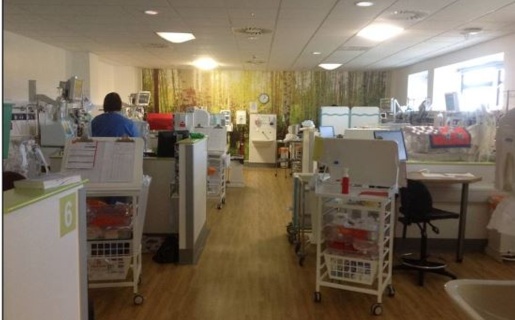
Critical care rooms In these rooms the babies receive the highest level of intensive care. Babies are often ill and require life supporting treatment. Each baby has a dedicated space and is usually nursed in an incubator. You will find that this area is often busy with lot of equipment, staff and activity. |
|
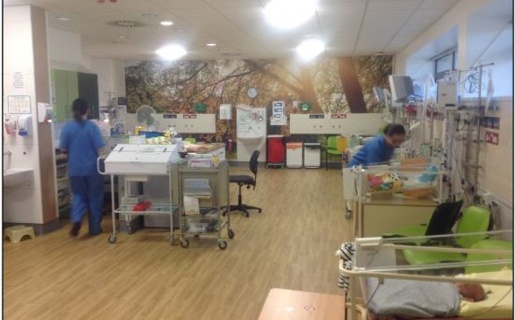
Nursery We call this "SHIPS" after the Singleton Hospital Infant Parent Support group. As your baby’s condition improves, he/she will be transferred to this area. This is less busy and babies are often nursed in an open cot. The focus is primarily on establishing feeding and promoting growth. The aim is to prepare your baby for going home. Pictured: SHIPS |
|
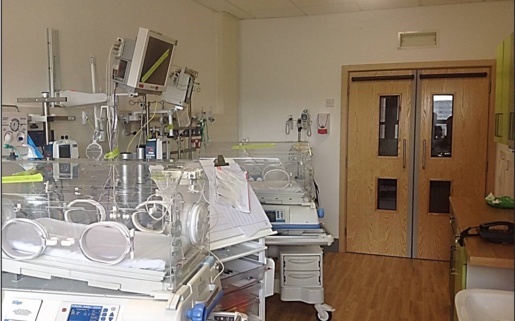
Segregation room In this room, two infants either infected or presumed to have similar bugs are grouped before they are given all clear. Full intensive care facilities are available on this unit. Occasionally this room may be used as an additional critical care area when more beds are required. The same level of medical and nursing care will be provided according to your baby’s needs. |
|
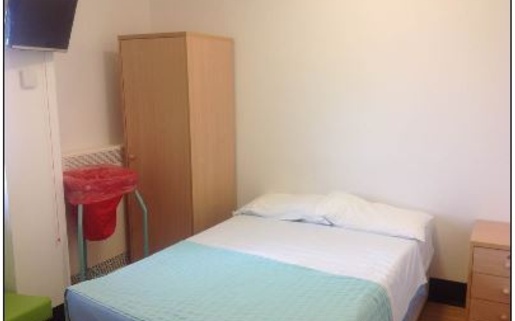
Family unit The family unit has two bedrooms and a bathroom. This provides an opportunity for parents to stay with their baby, with nurses available to offer support and advice in preparation for home. There are another two bedrooms available for parents at Singleton which are located on level 4. |
|
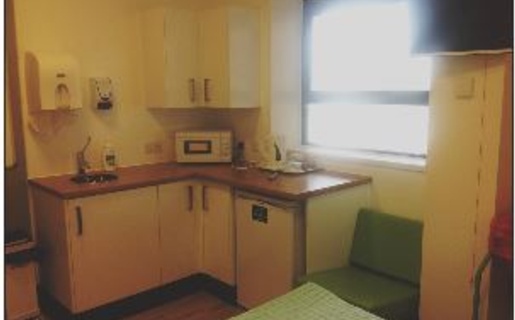
Quiet/Parent's room As a parent of a baby on the Neonatal Unit you will have access to a seating area just off the unit where there are tea and coffee making facilities and a fridge. Occasionally this room will be used to have discussions with parents relating to their baby’s condition, please respect everybody’s right to confidentiality and vacate the area when asked. |
|
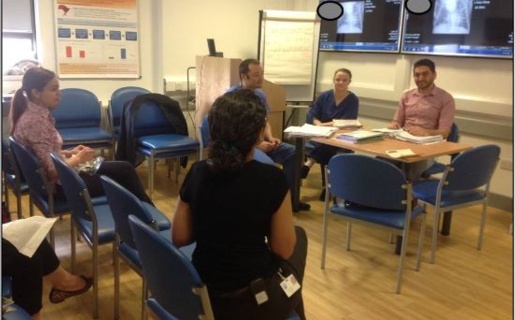
Seminar room Training and education are very important for our staff in order to maintain very high standards of clinical care. The department has a small but well equipped seminar room with modern audio-visual and teleconferencing facilities on site. Regular clinical and educational meetings take place in this room throughout the week. |
Isolation Room
Unfortunately, premature babies with impaired immunity nursed in a neonatal unit environment will develop infection from time to time. Our infection control procedures should stop spread of organisms from one baby to the other.
However, in some cases we may need to adhere to more advanced infection control procedures and we may have to isolate the affected infant in our state of the art isolation facility. It has all the equipment necessary to continue intensive care but has negative pressure facility to stop airborne infection spreading out from the clinical room.
Milk kitchen
The milk kitchen is where all the breast milk and formula milk is stored. You will be given a breast expression pump giving set which will be kept in a sterilisation unit in the milk room ready for your use. The breast milk is stored in this room in fridges and freezers.
How we support your baby
Maintaining temperature
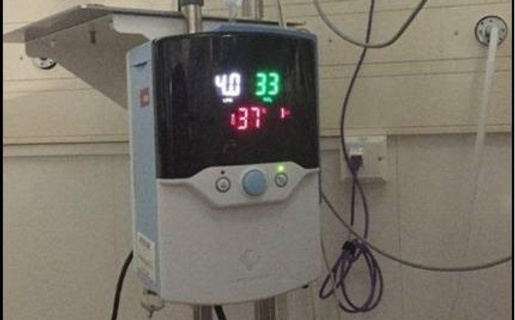
Incubator: The NICU nurses aim to maintain your baby's temperature at around 37'C. This is the optimum temperature at which your baby uses up the least energy to keep warm. In order to provide this your baby may be placed in an incubator. Incubators are plastic boxes that provide a controlled environment of warmth around your baby.
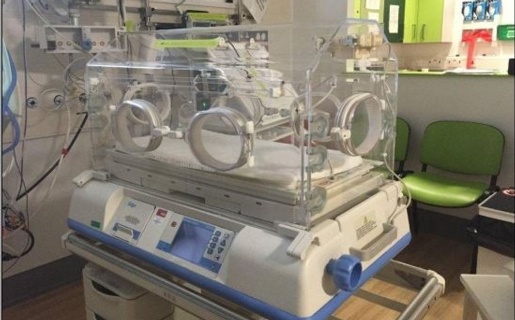
The temperature inside the incubator can be adjusted according to your baby's temperature, which is usually continuously monitored. Access to your baby is usually provided through portholes. The incubators also protect your baby from excessive noise and light. It also allows closer observation without the need for protective clothing in the critical phase of their illness.
Humidity: If your baby has been born prematurely then they may be nursed in an incubator with humidity. Humidity reduces the amount of water lost from your baby's skin and helps him to improve the maintenance of his body temperature.
It also helps to protect his skin, which, when premature, is very fragile as it has not had time to fully develop. Your baby may be nursed in humidity for 2 weeks or more, by which time his skin will have had time to develop and will be much less fragile.
Open care cots: As your baby matures and grows, they may be able to maintain their temperature in a normal cot with easier access. They will wear normal baby clothes and nursed in the same way as at home. In some babies, the transition to the open cot may be managed by using a warm mattress as an interim step.
Breathing support
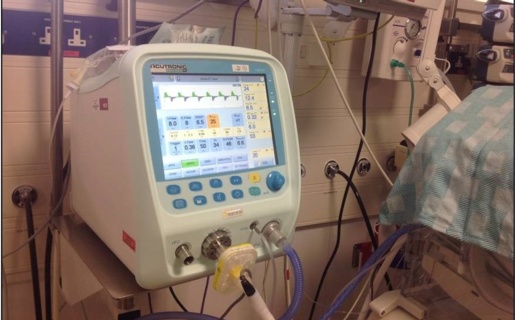
Ventilators: Machines used to breathe for your baby if he/she is not breathing sufficiently for him/herself. A tube called an endotracheal tube is placed through your baby's nose or mouth and down into the entrance of the lungs, through which a mixture of air or oxygen can be used to breathe for your baby. A number of different ventilators are used on the NICU, and the most appropriate one is chosen according to your baby's condition.
CPAP: helps keep the lungs expanded by pushing a small amount of air or oxygen into a baby's airway through little plastic tubes placed just inside the nose, or by a small mask over the nose. The air sacs within the lungs are kept inflated preventing them from collapsing at the end of each breath, thus preventing the inner surfaces sticking together. By using CPAP the baby does not have to make such an effort with each breath.
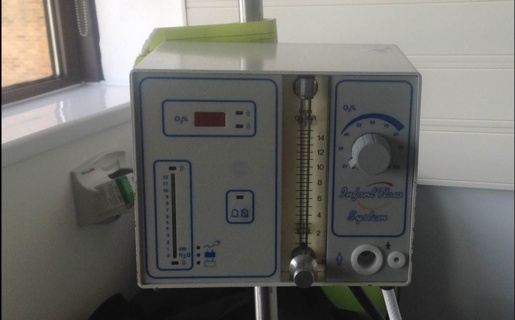
High Flow Nasal Cannula Therapy: This is a method of giving a sufficient flow of warm and moist mixture of air and oxygen through tiny nasal cannulae to help baby’s spontaneous breathing. It provides a high level of comfort while providing adequate respiratory support.
Nutritional support
Feeding initiation
Critically ill babies including premature infants should receive maternal breast milk as their first feed, preferably within 24 hours of birth. The initial breast milk (colostrum) is crucial as it has lifelong impact on the development of appropriate immunity, facilitates further organ development and helps to fight off life threatening infection.
Staff on the unit and labour ward will help and support mothers to express breast milk within the first 24 hours.
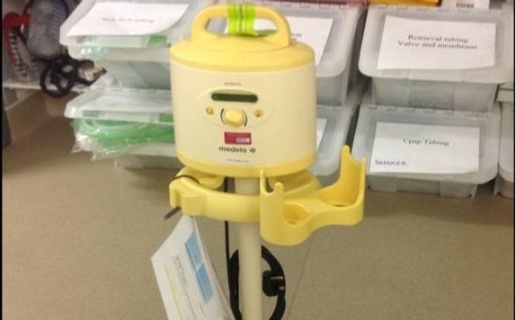
Pictured: A breast Pump
Breast milk expression
Breast milk is the best food for all babies, particularly for the vulnerable preterm infants. In essence for preterm infants, this is not a lifestyle choice but similar to lifesaving medicines.
It contains antibodies which are essential to prevent infections. It also has growth factors and hormones which aid growth and development. It is also more easily digested and tolerated by the immature bowel than any other milk. Breast milk is known to reduce serious life threatening conditions such as Necrotising enterocolitis (NEC) and sepsis.
We usually start giving breast milk to sick and premature babies within 24 hours of birth. It has been shown that early feeding helps babies tolerate feeding better and quicker. In babies who are less than 34 weeks gestation, this is generally given via a small tube placed directly into their stomach through their nose or mouth.
We ask mothers to start expressing milk for their babies as soon as possible after birth of their premature infant. The sooner you start to express your milk the better your milk production will be in the long run. At first you will only get very small volumes of colostrum. This is normal and the volume of milk will gradually improve. After the first 24 hours you will have access to an electric breast pump.
You will need to express 8 -12 times in 24 hours to establish your milk supply. In order to help with your baby’s brain development and to increase your milk supply you will be encouraged to have skin to skin contact with your baby. We would hope to begin this as soon as your baby is well enough, and you will be asked to wear clothes that can be easily opened at the front so the baby can be placed against your bare skin on your chest. (Dads are encouraged to participate as well as mums with this.)
The midwives, nursery nurses and neonatal staff have been specially trained to help mothers with breast milk expression. We also have a team of neonatal staff who have a special interest in helping you to express and breast feed. A specialist Infant Feeding Coordinator is also available for advice and assistance.
Once your baby is ready to learn to feed directly from the breast, from about 34 weeks onwards, you will be given help and support to achieve this. Your baby will not be given a dummy, bottles or formula milk without your permission.
Donor milk
Sometimes, despite all the support, it may take a few days before mothers can produce enough breast milk required to meet all the feed volumes of her premature baby. As it is important to continue to feed babies early and at a steady pace, sometimes, staff may approach you for consent to use human ‘donor milk’ to make up for the volumes of milk feeds required by your baby. This is a temporary measure to ensure that feeding progresses as normal until the mother’s milk volume improves over time.
Human donor milk is obtained from regulated and registered milk banks in the UK. The milk is usually donated by breast feeding mothers who have excess breast milk. The milk is pasteurised and screened as per national standards to rule out common infections and then frozen for transport and storage. The milk is then thawed prior to feeding your baby. Please note that donor breast milk is not a replacement or substitute for the mother’s breast milk as the beneficial effects of the fresh breast milk is significantly reduced by the process of pasteurisation and the process of freezing and thawing. It also does not have enough energy to sustain growth in the long term.
However, it is probably better than formula milk to establish milk feeding in high-risk premature babies.
In summary, mother’s milk is the best food for your baby in terms of growth, development and preventing complications. Sometimes human donor milk may be used to initiate and establish milk feeds only on a temporary basis. Please continue to express breast milk on a regular basis so that all donor milk could be replaced with your milk at the earliest.
Parenteral nutrition and lines
Very sick and premature babies will not be able to tolerate full milk feeds straight away. In order to sustain growth and prevent own tissue breakdown, many such babies will require nutritional support called ‘parenteral nutrition’. Parenteral nutrition is a mixture of fat, protein and sugar administered through a drip. Some babies may have a special catheter inserted into their blood vessels to facilitate this. Although this is essential to sustain the wellbeing of the baby early on, we aim to minimise the duration of this drip to prevent complications such risk of infection. The risk can be minimised by ensuring that milk feeding is started and tolerated early by the bay using mother’s own breast milk.
Prevention and treatment of infection
Due to the vulnerable nature of our babies on the neonatal unit we operate a strict infection control policy. We ask all visitors to remove their jewellery including watches and be ‘bare below the elbows’.
Please remove outer jackets and coats and ensure good handwashing techniques as displayed on the unit. We ask that anyone entering the unit use the alcohol gel by the front doors followed by handwashing when you enter the room of the baby you are visiting.
The germs that cause serious infections in babies can be carried on the hands. It is very important that everyone who is going to touch your baby washes their hands properly. If you have more than one baby on the unit it is important to wash your hands between caring for each baby.
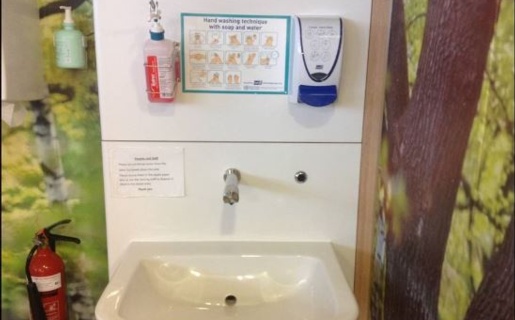
We restrict the number of visitors so that the exposure to any harmful infections is limited. Please see the visiting policy for clarification of details.
We ask that anyone with any illness such as diarrhoea, vomiting or flu-like illness not to visit until they are free of symptoms for a minimum of 48 hours.
Developmental care
The birth of any baby represents a sudden and intense change in the environment. Inside the womb the atmosphere is quiet with dimmed lighting, supportive positioning and consistent temperature. Premature and unwell term infants are unprepared for the harsh environment that they often face on NICU. Evidence suggests that the greater the degree of prematurity, the more negative an effect the harsh reality of the NICU environment can have on the infant. Taking this information into account, neonatal units worldwide try to minimise the risk to infants they care for by endeavouring to change and minimise the hostile environment in which they care for these vulnerable infants.
Light
Bright and harsh lighting with the neonatal unit can cause infants to become uncomfortably aroused and affect sleep-wake cycles. These infants are unable to sleep, but also unable to interact due to the harsh environment, thus hindering growth, wellbeing and social interaction.
Medical practitioners are aware of the detrimental effect of harsh lighting upon a premature or unwell infant’s wellbeing. Therefore, measures are taken to try to reduce the amount of inappropriate light your infant receives during his/her stay in neonatal services. Cot and incubator covers are used to absorb noise and to allow light at appropriate times, such as when your baby is awake and wanting to interact. This encourages sleep and helps to promote sleep-wake cycles throughout your baby’s stay. Thick, soft blankets are used to create boundaries to surround your baby, which not only provide comfort and support positioning, but also help to absorb residual noise from outside the incubator or cot.
Staff members are encouraged to ensure that each infant is appropriately covered at times when bright light is required, such as during an emergency, procedure or ward round. Lighting within the unit can be modified to emit night lights, spotlights are in place for each individual cot space so as not to disturb other infants with harsh fluorescent lighting and outside brightness from large windows is reduced.
There are inevitable limits to the amount of light reduction, especially in an intensive care environment, and it must be remembered that whilst every effort is made to reduce the amount of harsh lighting your baby receives, sometimes it is inevitable simply due to the nature of the work that takes place within the unit.
Parents are encouraged to interact with their baby, especially during alert and interactive states.
Noise
Excessive noise within the neonatal unit can cause distress and instability for the premature or unwell infant as well as affecting sleep-wake cycles, increasing the likelihood of hearing loss, hearing and language delays and creating increased stress for parents. Efforts are made to reduce the amount of unnecessary noise within the unit thus minimising these risks. Staff are encouraged to talk in quiet, hushed tones, and wear quiet-heeled footwear, handover takes place outside the nursery, incubators are designed to minimise noise exposure, alarms within the unit have volume control, bins have quiet closing lids, telephones and nurses stations are situated outside the nursery and cot or incubator covers, along with soft quilted blankets, are used to absorb residual noise. Each day there is a quiet period between 3pm and 5pm when every effort is made to reduce noise and minimise medical interventions. Day-night cycles are encouraged by trying to provide a quieter environment during the night to aid growth and wellbeing.
However, it must be remembered that whilst every effort is made to reduce excessive noise within the neonatal unit, sometimes, such as during an emergency, procedure or ward round, some noise cannot be avoided. Parents are encouraged to talk to their baby, as evidence suggests that the human voice, especially from a parent, is an infant’s preferred sound. You can help achieve this by reading to your baby for brief periods, talking to him/her whilst providing nappy/mouth care and talking to him/her whilst having kangaroo cuddles.
Warmth
Upon arrival within the neonatal unit, you will experience a very warm environment. This is because premature and unwell infants cannot regulate their own body temperature as effectively as well, term infants. The busy environment and heat from equipment add to the heat within the unit. Your baby may be nursed in an incubator, or heated cot, and will have his/her temperature closely monitored. Initially, he/she will not be dressed so that staff can assess and tailor care to your baby’s needs.
Parents are encouraged to have their baby out for cuddles and you shouldn’t be afraid of your baby becoming too hot or cold when out of his/her cot. Evidence suggests that kangaroo cuddles actually help an infant to regulate his/her body temperature more effectively and promotes the production of breast milk. You will also find that your own body temperature increases or decreases according to your baby’s requirements. Parents are also encouraged to remain well hydrated during their visits to the neonatal unit.
Rydym yn croesawu gohebiaeth a galwadau ffôn yn y Gymraeg neu'r Saesneg. Atebir gohebiaeth Gymraeg yn y Gymraeg, ac ni fydd hyn yn arwain at oedi. Mae’r dudalen hon ar gael yn Gymraeg drwy bwyso’r botwm ar y dde ar frig y dudalen.
We welcome correspondence and telephone calls in Welsh or English. Welsh language correspondence will be replied to in Welsh, and this will not lead to a delay. This page is available in Welsh by clicking ‘Cymraeg’ at the top right of this page.