
Pressure Ulcer Prevention and Intervention Service (PUPIS)


PUPIS is a specialised diagnostic and advisory service which works with other healthcare professionals (tissue viability nurses, physiotherapists, dieticians etc.) in order to:

  • Prevent pressure ulcers developing in at risk patients, through education and training of patients and their carers.
  • Provide early intervention to stop the pressure ulcers becoming severe and to allow healing without surgical intervention.
  • Improve access to health care for patients with pressure ulcers through the development and implementation of streamlined pathways
  • Prevent re-occurrence of ulcers once they have healed through education and provision of appropriate support systems
  • Improve specialist knowledge of health professionals by providing a series of in depth lectures in pressure ulcer prevention.


Pressure Ulcer Prevention and Intervention Service

Our aims are:
  • To determine why a patient has developed a pressure ulcer or why it is not healing and use that information to give expert advice, recommend and/or provide interventions to prevent the pressure ulcer getting worse and also to promote healing without the need for surgery
  • To improve pressure ulcer prevention and prevent recurrence, particularly for those at high risk, through appropriate management strategies, education and helping with the provision of support systems, where appropriate
  • To improve access to health care for patients with pressure ulcers by creating streamlined pathways of care, such as the wheelchair service and surgical closure pathways
  • To increase the specialist knowledge of healthcare professionals through information, education and training in pressure ulcer prevention and management and by sharing best practise across SB UHB, Wales and other health and social care systems.

PUPIS is an award winning innovative collaboration. The multidisciplinary team work together using their expertise to provide a service tailored to the individual’s circumstances.  The team comprises two clinical nurse specialists (CNS), a clinical scientist and two rehabilitation engineers. We also have administrative support. The service is overseen by a consultant reconstructive plastic surgeon from the Welsh centre for burns and plastic surgery.

We are part of the Rehabilitation Engineering Unit (REU) in Medical Physics & Clinical Engineering, based at Morriston Hospital, Swansea.


Clinical Nurse Specialists - The nurses are specialists in managing people with complex pressure ulcers. Where appropriate for the individual, the Clinical Nurse Specialists may do any of the following:

  • Provide advice and information to appropriate healthcare professionals over the telephone.
  •  Visit the person where they live to thoroughly assess their pressure ulcer, living environment and any equipment they already have.
  • Make recommendations on dressings and treatments for the pressure ulcer.
  • Provide advice on sitting regimes and repositioning.


Clinical Scientist and Rehabilitation Engineers  - Experts in postural support and pressure relief. When their input is required, the Engineers may accompany a clinical nurse specialist on a visit to where the person lives, or they may make a separate visit. Where appropriate for the individual, the Engineers and Scientist may do any of the following:

  • Assess the person’s postural support and pressure relief in their existing equipment which could include: wheelchair, armchair, bed and commode.
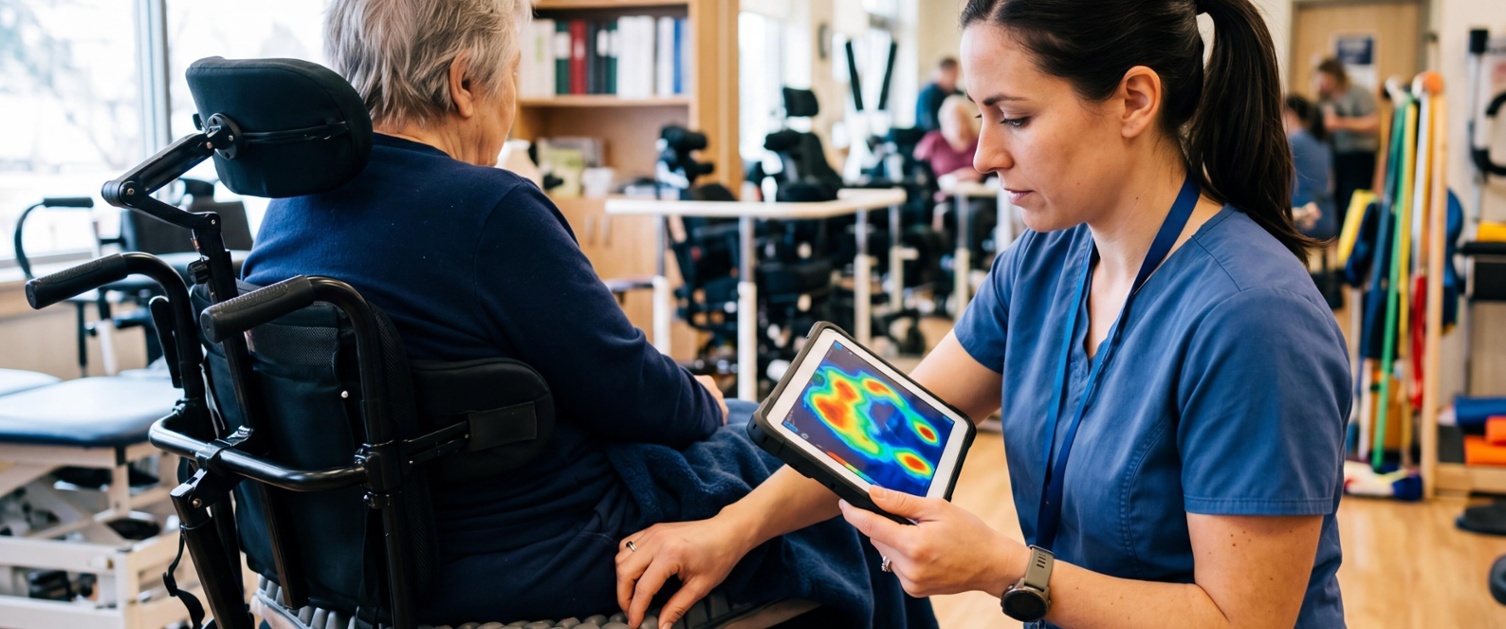
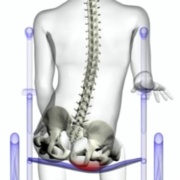
  • Use pressure mapping equipment to aid with equipment assessment and provision.
  •  Educate patients, carers and health care professionals about the importance of posture and repositioning to promote healing and prevention of recurrence of pressure ulcers.
  • Design and manufacture bespoke cushions or postural supports to promote management and healing of the pressure ulcer where off the shelf equipment is insufficient.
PUPIS is a specialist service to advise and help the usual care team of a person with a pressure ulcer.

We are happy to hear from you about anyone who lives in the SB UHB area with any category of pressure ulcer that has not responded to a period of appropriate local management.

We also offer initial advice by telephone about:

  • People that you think are at risk of pressure ulceration
  • Persistent reddening of skin over a pressure point that does not blanche
  • Anyone with rapid deterioration of their pressure ulcer 


We can only offer general advice if we have not yet assessed the person that you ring us about.


Many pressure ulcers will get better with simple measures, so please carry these out first before you contact us. There is information about clinical advice later in this document.

  • People who live outside the SB UHB area: we do not accept direct referrals from outside SB UHB at the current time.
  • People who just need pressure mapping or wound measurement for other purposes.
  • Someone that you just want a plastic surgery opinion about. Please refer directly to the Welsh centre for burns & plastic surgery in that case.
  • Patients who are in hospital. Please refer to Tissue Viability Services.

Once we have all the information we will decide how we can help you best. We provide a bespoke service according to what is needed. For example:

  • We may give you or another appropriate healthcare provider advice and information by telephone
  • One of our clinical nurse specialists may arrange to visit the person where they live and make a thorough assessment of the pressure ulcer, their living environment and any equipment they have already. A specialist rehabilitation engineer may go with them to assess support systems being used by the patient and to help find the cause of the pressure ulcer and identify risk factors in the home. We can give the person and their carers specific advice about activity, posture and re-positioning if needed.
  • We can recommend equipment and support surfaces that will promote healing and management of the pressure ulcer.
  • As part of our assessment we may suggest involving other multi-disciplinary teams and services as part of resolving the problem: for example, wheelchair services.
  • We can design, manufacture and issue a bespoke cushion or positioning support if we think it would help to promote healing and management of the pressure ulcer.  If there is an “off-the-shelf” solution that would suffice we will recommend that. We have some equipment ourselves that we can provide if you do not have it locally.
  • We sometimes carry out specialist pressure mapping assessment and provide training to patients, carers and health care professionals if our assessment suggests it would be helpful.

Once we see or are informed that the pressure ulcer is healing or has actually healed then we would no longer offer support and we will discharge the patient.  Sometimes we will still discharge the patient if there is only limited evidence of healing but we are satisfied that the local management is optimal. Unfortunately we cannot provide regular follow-ups or continual involvement.

Once we have discharged a patient we can be asked to see them again by sending us a new referral form.

We offer three months support from our rehabilitation engineers for any item of equipment that we manufacture. Following that, repair or direct replacement of bespoke issued equipment will be considered on an individual basis.  You can get a replacement “off-the-shelf” cushion for an NHS wheelchair from the Wheelchair Service (Telephone: 02920 313905). 

Make sure you report all pressure ulcers as a clinical incident.

It is a requirement in SB UHB that all pressure ulcers, wherever they develop, must be reported as clinical incidents. In fact category 3 and 4 pressure ulcers are termed “serious incidents” by the Welsh Government Patient Safety Team. Because we provide specialist advice and are not the primary care providers we expect that others will have reported the pressure ulcer already to the Health Board using DATIX.

We take reporting pressure ulcers very seriously. During our initial assessment, we will ask the healthcare professional in attendance if the pressure ulcer has been reported and if not will provide advice on how to do it. This will be documented in our correspondence with the referrer and may be copied to the appropriate Long Term Care Team.

We are sometimes asked to help investigate pressure ulcer incidents. Rarely there is a possibility of neglect as a cause and in those circumstances we take advice from the Health Board’s safeguarding team.

You can write to us:

PUPIS

Rehabilitation Engineering Unit

Specialist Rehabilitation Centre

Swansea Bay University Health Board

Morriston Hospital
 
Swansea
 
SA6 6NL
 

Ring Us:

01792 703609

Or email us:

SBU.PUPIS@wales.nhs.uk

Rydym yn croesawu gohebiaeth a galwadau ffôn yn y Gymraeg neu'r Saesneg. Atebir gohebiaeth Gymraeg yn y Gymraeg, ac ni fydd hyn yn arwain at oedi. Mae’r dudalen hon ar gael yn Gymraeg drwy bwyso’r botwm ar y dde ar frig y dudalen.

We welcome correspondence and telephone calls in Welsh or English. Welsh language correspondence will be replied to in Welsh, and this will not lead to a delay. This page is available in Welsh by clicking ‘Cymraeg’ at the top right of this page.