Hearing services for children

Hearing assessments are performed for children of all ages in the Children's Audiology department and in the community audiology clinics.
The method of assessment will vary depending on the age and development of the child. However, both behavioural and objective testing is possible for most children.
We also provide digital hearing aids for children diagnosed with permanent and temporary deafness and keep these children under regular review.
You can find more information about the paediatric audiology in the sections below. For our contact information, please follow this link to see the audiology home page on the SBUHB website.
If you are concerned about your child's hearing, you will need a need a referral for hearing assessment from the GP, health visitor or another medical professional.
The Children's Audiology service is piloting a parental referral system for pre-school aged children. If you are a parent or guardian of a pre-school child and are concerned regarding their hearing, you can complete the electronic referral form.
Follow this link to access the parent referral form for pre-school aged children.
Waiting times can vary depending on demand and clinical urgency. The current waiting time for routine hearing tests is up to 20 weeks.
There are routine hearing screening programmes for children, one at birth and one at reception year (school year they turn five years old). More information on this is in the accordion named 'Routine hearing screening for children'.
We offer booked appointments in different locations within the Swansea Bay University Health Board. Your child’s hearing assessment (or hearing aid fitting) may take place in the paediatric outpatients department in Singleton Hospital, the Audiology Department in Neath Port Talbot Hospital or for older children, in one of the community audiology clinics.
We will always try to offer your child an appointment at the most convenient location. Please note that waiting times differ across our sites, so we may offer an alternative location to ensure your child is seen as quickly as possible.
There is limited free car parking available at all of the sites so please allow sufficient time to allow for carparking. For directions and addresses, follow this link to our Find Us Page.
Singleton Hospital
Paediatric Audiology Room, Paediatric Outpatients Department, Level 2, Singleton Hospital, SA2 8QA
Please enter via the Child Health and Maternity entrance. There is a staircase and lifts available for level 2 for the Paediatric Outpatient Department. There are signs of rainbow to direct you to the Paediatric Outpatient Department. At the Paediatric Outpatient Department, you can book in with the receptionist and take a seat in the waiting room.
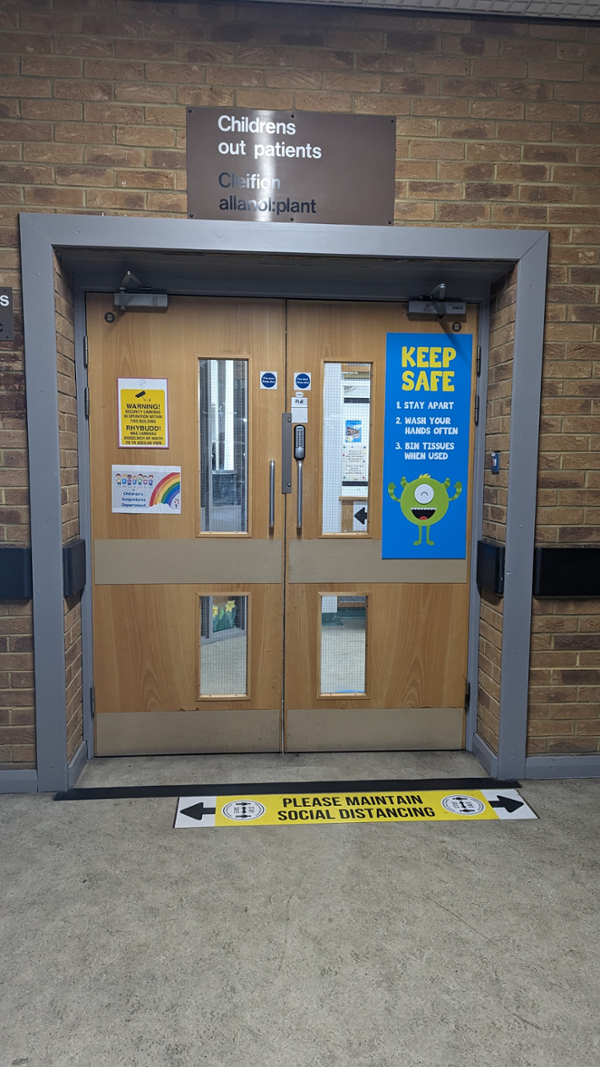 Children's outpatient entrance, Singleton Hospital
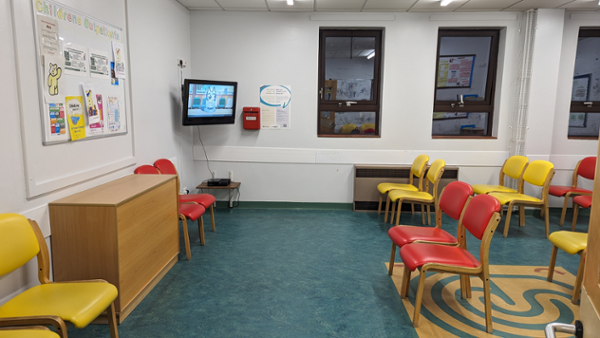 Children's outpatient waiting room, Singleton Hospital
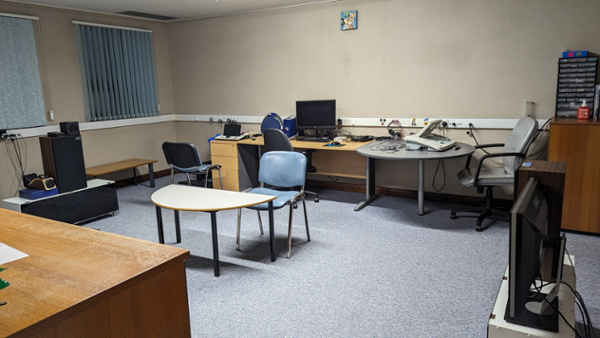 Audiology room, Singleton Hospital
Neath Port Talbot Hospital
Audiology Department, Neath Port Talbot Hospital, SA12 7BX
The audiology department is located on level 2 in Neath Port Talbot Hospital.
Enter the main entrance into the hospital atrium. Turn right after the reception desk and walk down the main outpatient corridor. Before the green suite, there is a staircase and lift to level 2. Please take a seat in the waiting room and the audiologist will call you for your appointment.
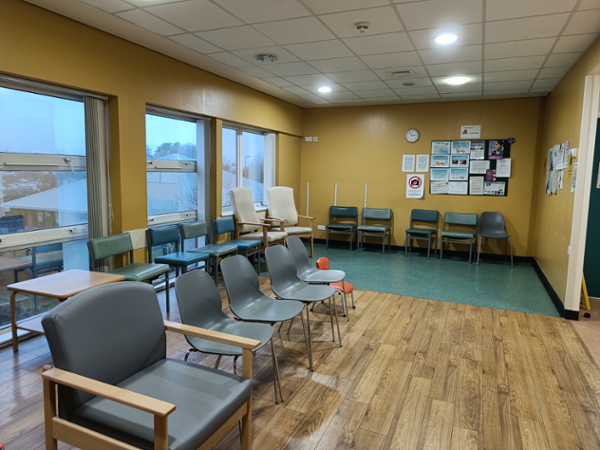 Audiology waiting room, Neath Port Talbot Hospital
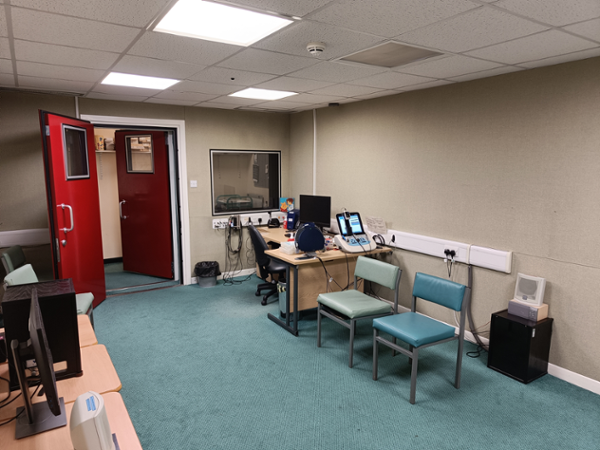 Audiology room, Neath Port Talbot Hospital
Morriston Clinic
Morriston Clinic, Sway Road, Morriston, SA6 6JA
Morriston Clinic is directly opposite the fire station in Morriston. Please enter via the main entrance. Please press number 1 on the buzzer and the audiologist will let you into the clinic. Turn immediately left and take a seat in the waiting room and the audiologist will call you for your appointment.
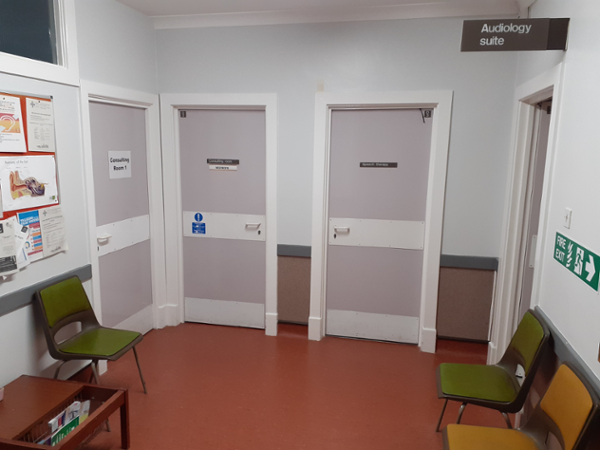 Waiting room, Sway Road Morriston Clinic
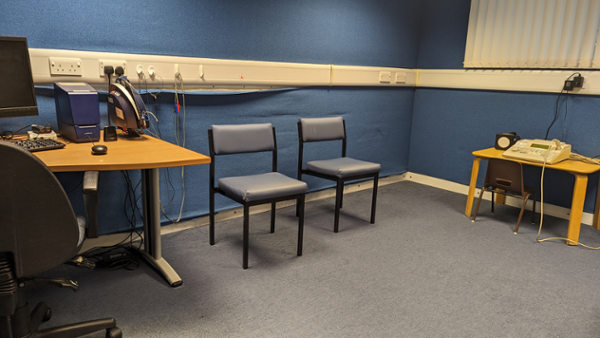 Audiology room, Sway Road Morriston Clinic
Gorseinon Hospital
Audiology Room, Outpatients, Gorseinon Hospital, SA4 4UU
Enter via the main entrance at the front of the hospital and turn immediately right into the waiting area. Please take a seat in the waiting room and the audiologist will call you for your appointment.
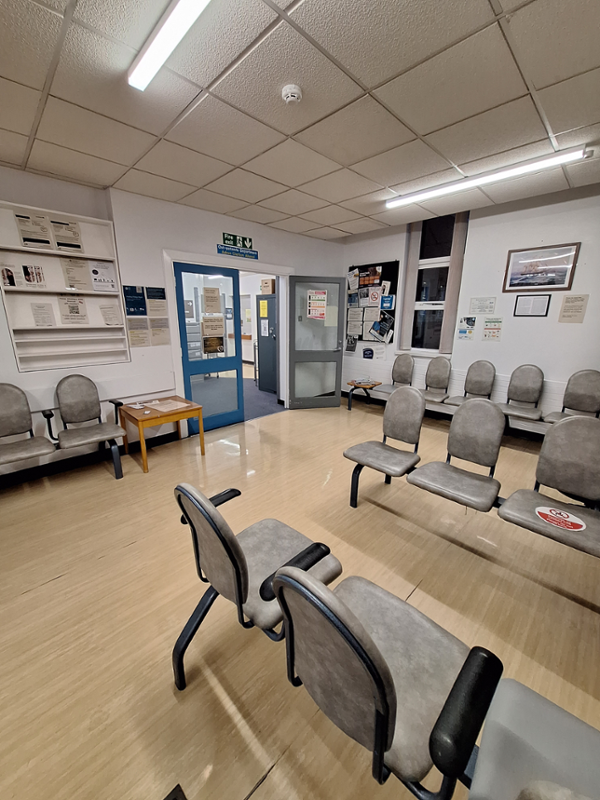 Waiting room, Gorseinon Hospital
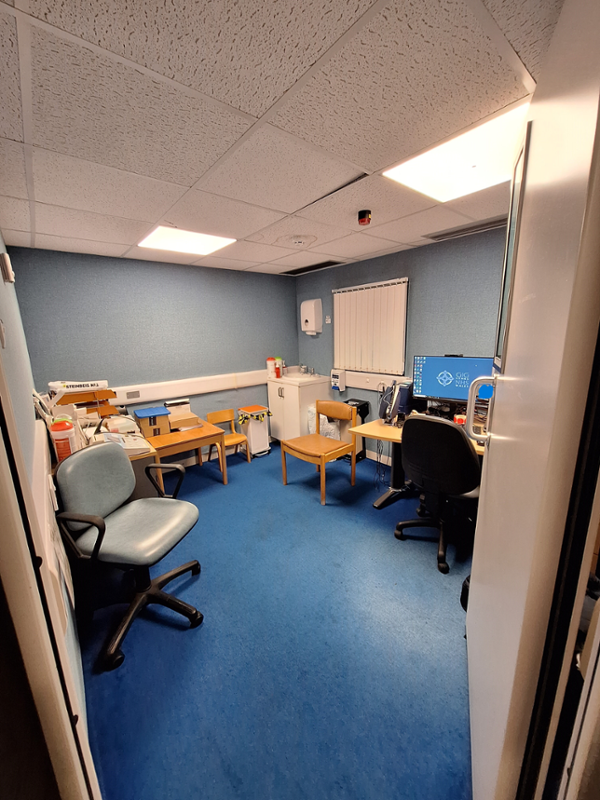 Audiology room, Gorseinon Hospital
Your child may have been referred to us for a hearing test by your GP, Health Visitor or other professional or they may have been seen in Audiology previously and need a further hearing test. Your child may not be used to seeing clinicians. Therefore, you may wish to show them friendly cartoon images on the internet first so that they are more comfortable with us.
How we assess a child’s hearing will depend on their age and development, but it will usually include a listening game or task. If we have asked you to practice certain games before you attend, please do so as it is likely to make the appointment more fun and successful for your child.
To help you and your child feel more prepared, the following YouTube clips show you what the tests may involve.
Go here to watch a YouTube video on what a children’s audiology test may involve.
Go here to watch a YouTube video on how to prepare for a children’s audiology test.
Please note: The link above is available in English only. The Health Board are not responsible for third party websites. We apologise if this causes any inconvenience.
If you are attending for a hearing aid review, please make sure to bring the hearing aids plus any accessories along with you.
Please let us know if you require communication support or if you have any special requirements. If you or your child are medically vulnerable and wish for the staff member to wear a face mask, please tell the staff member at the appointment. Alternatively, please contact the department on the above contact information before the appointment to discuss your requirements.
Typically, we like to do three things in most hearing assessment appointments:
- Otoscopy (having a look in your child’s ears)
- Tympanometry (a test that involves putting a soft rubber tip into your child’s ear to see how well their eardrum is moving)
- Audiometry (a hearing test - this can be achieved in different ways)
There are a variety of different hearing testing options that are suitable for different children. The audiologist will decide which type of hearing test is most suitable for your child, based on their age and their engagement with the task.
During most appointments, we are able to give you the results of your child’s hearing test. Sometimes, it may take a few appointments to gather all the information about your child’s hearing.
If your child does not have a hearing loss, they may be discharged and will not require any further appointments. If you develop hearing concerns in the future, a new referral will be needed.
If a deafness is diagnosed, or if your child is identified as being at risk of developing a hearing loss in the future, it is likely that you will be need an audiology review. This will be discussed with you and if suitable, your child at the appointment. If you are concerned that your child’s hearing has significantly worsened while waiting for a review, please contact audiology directly for a sooner appointment.
Conductive deafness
Conductive deafness occurs when the sound cannot travel through the outer and/or middle ear to the inner ear. The most common type of conductive deafness in children is caused by glue ear.
For more information about Glue Ear, follow this link to the Cardiff and Vale UHB website.
There are different intervention options for glue ear which can involve surgical intervention (Grommets) or non-surgical interventions which can include temporary use of hearing aid(s), use of autoinflation device or 'watchful waiting'. There are benefits and limitations to these interventions will be discussed with you and if appropriate, your child.
For more information about managing Glue Ear, follow this link to the NICE website.
Go here for more information about fluid in the ear on the Cardiff and Value UHB website.
Permanent deafness
Sensorineural (or nerve) deafness is the most common form of permanent deafness and involves the inner ear (cochlea) and/or the auditory nerve. If your child is diagnosed with a permanent deafness, they will require regular audiology reviews and may be offered hearing aids.
If your child requires a hearing aid repair, a new earmould or if the hearing aid has been lost. Please contact the audiology department by:
Telephone: 01792 285270
Email: SBU.Childrenaudiology@wales.nhs.uk
Text message: 07875 575842
There are some repairs and hearing aid maintenance that may be done at home. Here is a quick checklist for some common faults with hearing aids:
- Check that the battery is in correctly.
- Try replacing the battery with a fresh one.
- Check that the ear mould is not blocked with wax.
- Check for small droplets of moisture in the tubing which may be blocking the sound.
- Check that the tubing is not twisted, kinked, squashed or split.
- If your child’s hearing aid has a programme button activated, it may be on the wrong setting. Turn the hearing aid off and back on, or try pressing the button.
Go here for more information about hearing aid repairs on the SBUHB website.
In Wales, babies and children are offered two routine hearing screens. The first is offered when they are newborn and the second screen is offered when they reach compulsory school age (the school year they turn five years old).
IMPORTANT - if you have any concerns regarding your child’s hearing, please seek a referral from your Health visitor or GP for a hearing assessment.
Newborn hearing screening - All newborn babies will be offered to have their hearing screened by a newborn hearing screener. This may be done on the ward or you may be sent an appointment to attend a community health clinic. The screen will involve putting a soft tip into each of the baby’s ears. The screen helps to tell the screener which babies may need a further hearing test or not. The screen does not detect all hearing losses and some hearing losses can develop with time.
School entry hearing screening - All reception aged children will be offered a hearing screen at school. The school hearing screeners will arrange a date with your child’s school and you will be sent an opt-out consent form before the visit.
From September 2022, if your child is of reception age but is home-schooled, you will be contacted by the Audiology department to arrange your child’s hearing screen.
The Children’s Hearing Service Working Group (CHSWG) is a multidisciplinary group set up to improve the services for children and their families with hearing difficulties. The Group includes Parent Representatives as well as Health Care professionals such as Children's Doctors, Speech and Language Therapists, Teachers of the Deaf and voluntary organisations such as National Deaf Children’s Society (NDCS) Representatives. If you are interested in becoming a representative, your child must be diagnosed with a hearing loss and aged under 18, please contact your Audiologist or Teacher of the Deaf or alternatively, you can complete a short questionnaire by clicking on the link below.
Follow this link to complete the CHSWG survey.
CHSWG discusses various topics relating to children, young people with deafness and their families. If you require any further information, including copy of previous meeting minutes, please contact us via email SBU.childrenaudiology@wales.nhs.uk.
Rydym yn croesawu gohebiaeth a galwadau ffôn yn y Gymraeg neu'r Saesneg. Atebir gohebiaeth Gymraeg yn y Gymraeg, ac ni fydd hyn yn arwain at oedi. Mae’r dudalen hon ar gael yn Gymraeg drwy bwyso’r botwm ar y dde ar frig y dudalen.
We welcome correspondence and telephone calls in Welsh or English. Welsh language correspondence will be replied to in Welsh, and this will not lead to a delay. This page is available in Welsh by clicking ‘Cymraeg’ at the top right of this page.