Accessing audiology for the first time
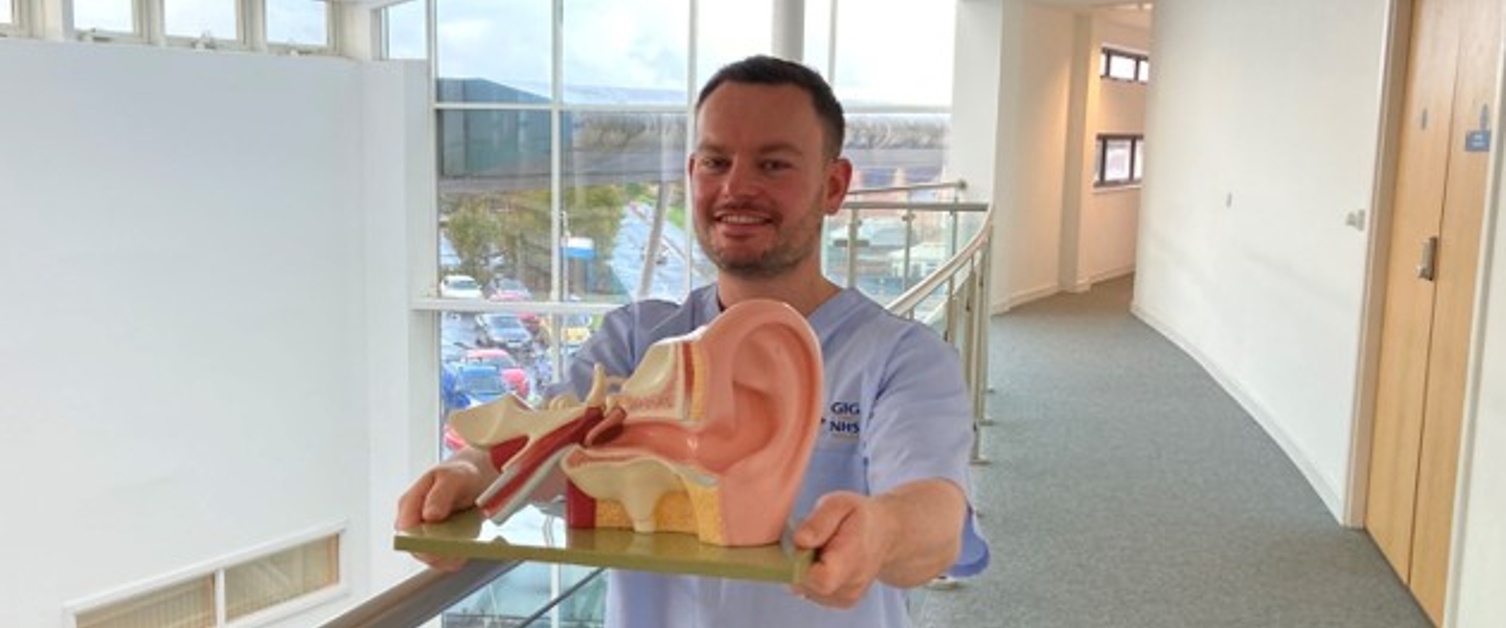
Audiology & Brain Health
Age and genetics are the biggest unmodifiable factors in dementia risk, but other factors, including hearing loss, are also associated with dementia. The association between hearing loss and dementia is not well understood and is likely to be complex. Hearing loss is linked to conditions like depression and social isolation, which are also connected to dementia. Untreated hearing loss can result in social isolation, which has been shown to increase the likelihood of developing dementia. Managing hearing loss with hearing aids can improve communication and support social engagement, both of which are important for maintaining overall well-being and brain health. However, more research is needed to fully understand how managing hearing loss might impact dementia risk.
Go here to watch a video on hearing loss and dementia on YouTube.
Dementia Care
If you’re having difficulty with your hearing, you should first seek advice from your GP surgery. Your GP surgery may ask you questions about your ears and your hearing. You may then have an appointment with your GP surgery or with an Audiologist. Your Audiology appointment will either be at the hospital or in a GP Based audiology clinic.
What is GP Based Audiology?
GP based audiology or Primary Care audiology is a service that helps people with hearing problems or ear‑related concerns in a local, easy‑to-access setting, such as a GP practice or community clinic. Typically, an appointment can be accessed within 3 weeks.
What this service can help with:
- Checking your hearing
- Looking in your ears to find the cause of symptoms
- Removing earwax (Go here to the Removing earwax page on our website).
- Giving advice about hearing and ear health
- Advice on tinnitus
- Sending you to the right specialist if needed (for example, ENT or hearing aid services).
When to access the GP based audiology service
Please note, we do not carry out hearing aid repairs or adjustments in any GP based audiology clinics.
GP based and Primary Care audiology locations
Below shows the different GP clusters and which primary care audiology clinic are based within that cluster. Patients registered with these surgeries can make an appointment by contacting their GP surgery.
- Afan Cluster patients will be seen at the Port Talbot Resource Centre.
- Neath Cluster patients will be seen at the Primary Care Hub on Dyfed Road.
- Cwmtawe Cluster patients will be seen at Clydach primary care centre.
- Upper Valleys Cluster patients will be seen at Primary Care Hub on Dyfed Road.
- Llwchwr Cluster patients will be seen at Penclawdd Health Centre.
- Penderi Cluster patients will be seen at the audiology department at Singleton Hospital.
- Bay Health Cluster (Beacons centre for health SA1 and Norton Clinic) patients will be seen at the Beacons centre for health SA1 or Norton Clinic.
- City Health (Beacons centre for health SA1) patients will be seen at Beacons centre for health SA1.
What to expect at your GP Based Audiology appointment
Options for managing hearing loss
| Hearing aids | Assistive listening devices | Managing without hearing technology | |
|---|---|---|---|
| What does this involve? |
Your hearing aid(s) will be programmed by your Audiologist using a prescription which is based on your most recent hearing assessment. Sometimes an earmould impression will be taken prior to being provided with hearing aids. |
Using devices such as, a telephone with a volume control, a loop system or a loud doorbell. You can use assistive listening devices to hear specific sounds that are important to you. |
Doing nothing or learning ways to manage your hearing loss such as lip-reading and using good communication strategies. These may include facing the person & moving away from noisy areas. |
| How will this help with my hearing? |
Two hearing aids may benefit those who want to hear better in noisier environments such as cafes or restaurants. One hearing aid may benefit those who want to hear better in quieter settings such as at home, on the telephone or watching the TV. |
Assistive listening devices may improve your ability to hear specific sounds. For example, the television sound might be clearer. |
This will not help your hearing but may help you to communicate more effectively. |
|
What should I expect? |
You may need some time to get familiar with using hearing aids. This usually takes about 1-2 months. |
You will need to learn how to use assistive listening devices. Your audiologist can help you find out about these devices. |
Your hearing difficulties may continue but you may find that a new strategy allows you to manage more effectively. |
|
Are there situations in which this option will not help? |
Hearing speech in noisy environments can remain a challenge. The more noise around you, the less effective hearing aids may be. | Assistive listening devices will only help you hear specific sounds. Some devices are not portable. | Yes, if sounds you need to hear are too quiet for you. |
| Do I have to pay? |
Hearing aids and batteries are free of charge from the NHS. There may be a charge for replacement of lost hearing aids (£75 per hearing aid). There is a range of charges for hearing aids purchased from the private sector. |
Some assistive listening devices may be provided free in your area. However, you may be expected to pay for some devices and for replacement batteries. |
Some lip-reading classes are free but sometimes there is a charge The audiologist can provide information on availability of local classes, see here for more details. |
|
What maintenance is involved? |
You will need to clean your hearing aids and replace batteries. Go here for more information on hearing aid maintenance and repairs. |
You may need to replace batteries. | None. |
|
Can I use more than one option? |
Hearing aids can be used alone or with assistive listening devices. | Assistive listening devices can be used alone or with hearing aids. | Yes, non-technological intervention can work alongside technology. For example, lip-reading with help understanding along with hearing aids or a TV loop. |
Rydym yn croesawu gohebiaeth a galwadau ffôn yn y Gymraeg neu'r Saesneg. Atebir gohebiaeth Gymraeg yn y Gymraeg, ac ni fydd hyn yn arwain at oedi. Mae’r dudalen hon ar gael yn Gymraeg drwy bwyso’r botwm ar y dde ar frig y dudalen.
We welcome correspondence and telephone calls in Welsh or English. Welsh language correspondence will be replied to in Welsh, and this will not lead to a delay. This page is available in Welsh by clicking ‘Cymraeg’ at the top right of this page.