Swansea Bay's skin cancer team urges people to stay sun safe this summer
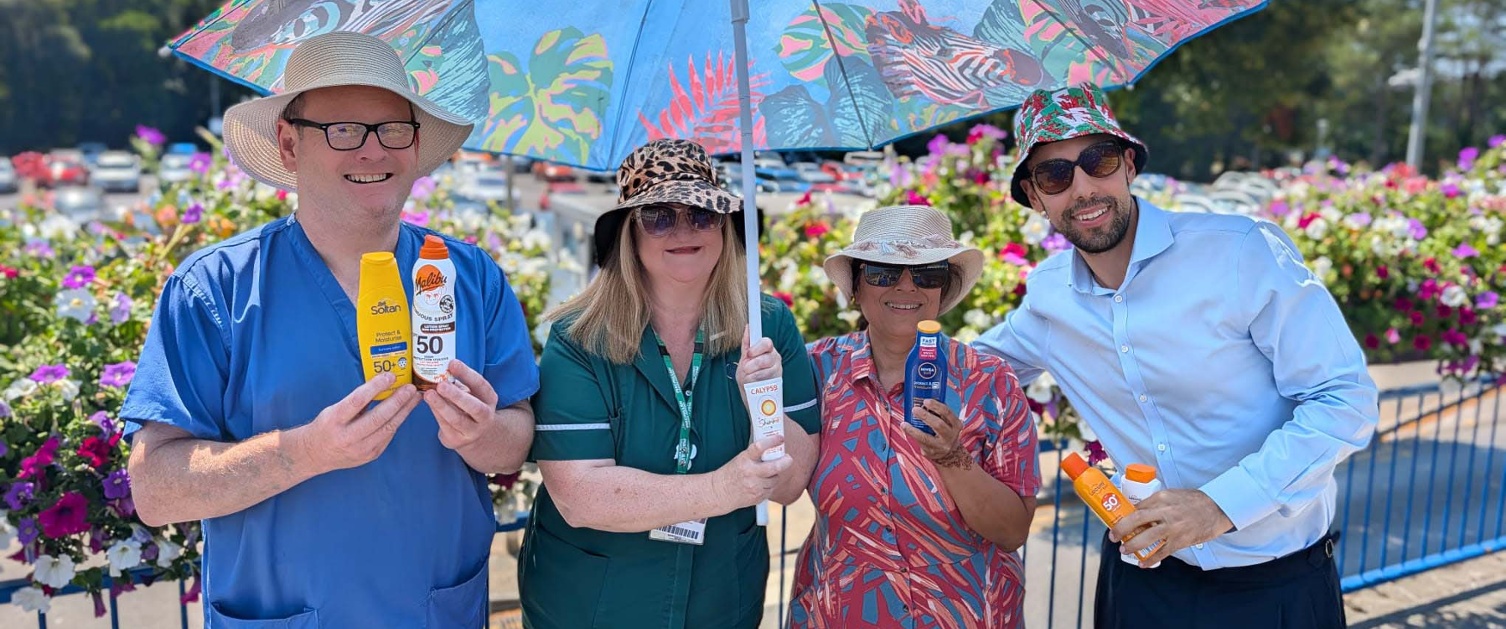
Swansea Bay University Health Board’s dermatology skin cancer team is encouraging people to enjoy the sunshine safely this summer and be aware of the signs and symptoms of skin cancer.
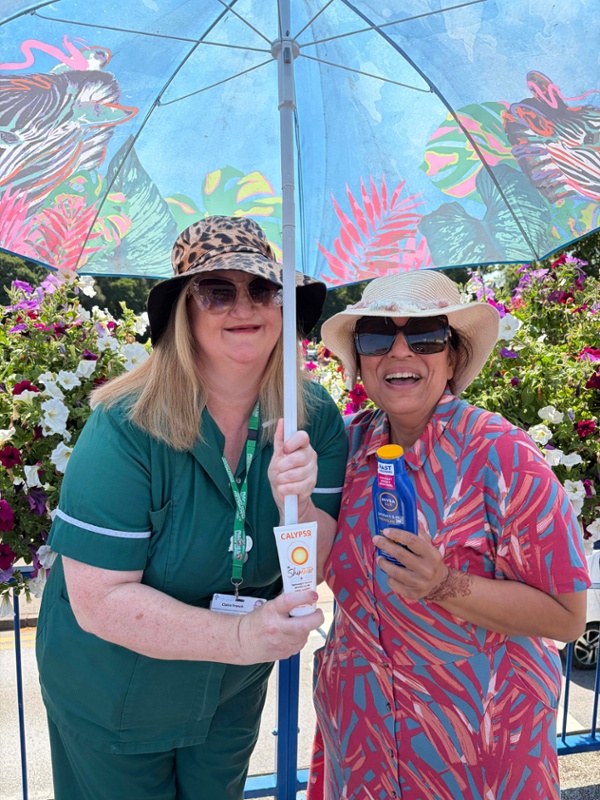
With scorching weather currently showing little sign of making way for more traditional Welsh summertime conditions, the team is reminding people to take extra care when spending time outdoors.
Increased exposure to ultraviolet (UV) radiation can lead to painful sunburn, long-term skin damage and a higher risk of developing skin cancer.
Claire French, a Macmillan healthcare support worker with the dermatology skin cancer team, works alongside Dr Rupa Dave, skin cancer lead, and the wider dermatology team to support patients throughout their care.
“Skin cancer is becoming increasingly common, with the number of cases continuing to rise each year,” said Claire on behalf of the team.
“It’s a significant issue across Swansea Bay and throughout Wales. That’s why it’s so important to raise awareness and help people understand the signs and symptoms to look out for.
“Being sun safe isn’t about avoiding the outdoors altogether - it’s about understanding the risks and taking simple steps to protect yourself.”
The team also highlighted the lasting impact that sunburn can have, particularly during childhood.
“Just one blistering sunburn during childhood can more than double a person’s risk of developing melanoma later in life.
“We still see many people with severe sunburn, including bright red skin and blistering. Much of this can be prevented through greater awareness and better sun protection.”
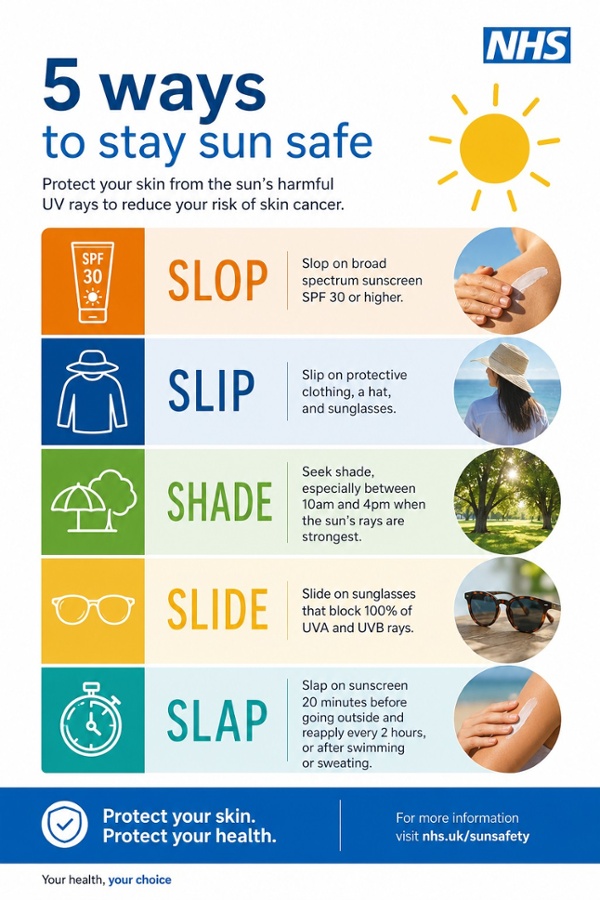
The team recommends:
- Applying sunscreen around 20 minutes before going outside.
- Reapplying sunscreen regularly, particularly after swimming or sweating.
- Avoiding direct sun exposure during peak UV hours between 11am and 3pm.
- Seeking shade whenever possible.
- Wearing protective clothing, a wide-brimmed hat and sunglasses.
- Using a broad-spectrum sunscreen with a minimum SPF of 30.
Claire added: “We don’t want to stop people enjoying themselves and making the most of the good weather when we get it. It’s simply about understanding how to protect yourself while you’re outdoors.”
The team is also encouraging people to become familiar with their skin and seek medical advice if they notice any changes.
Warning signs can include:
- Changes in the size, shape or colour of an existing mole or lesion.
- Itching or bleeding.
- The appearance of a new lesion.
- Anything that looks noticeably different from surrounding moles or marks on the skin - often referred to as the “ugly duckling” sign.
Anyone concerned about a change to their skin should contact their GP. Early detection is vital and, in many cases, skin cancer diagnosed at an early stage can be treated simply by removing the affected lesion.
Rydym yn croesawu gohebiaeth a galwadau ffôn yn y Gymraeg neu'r Saesneg. Atebir gohebiaeth Gymraeg yn y Gymraeg, ac ni fydd hyn yn arwain at oedi. Mae’r dudalen hon ar gael yn Gymraeg drwy bwyso’r botwm ar y dde ar frig y dudalen.
We welcome correspondence and telephone calls in Welsh or English. Welsh language correspondence will be replied to in Welsh, and this will not lead to a delay. This page is available in Welsh by clicking ‘Cymraeg’ at the top right of this page.