Swansea Bay's cardiology team in first for Wales
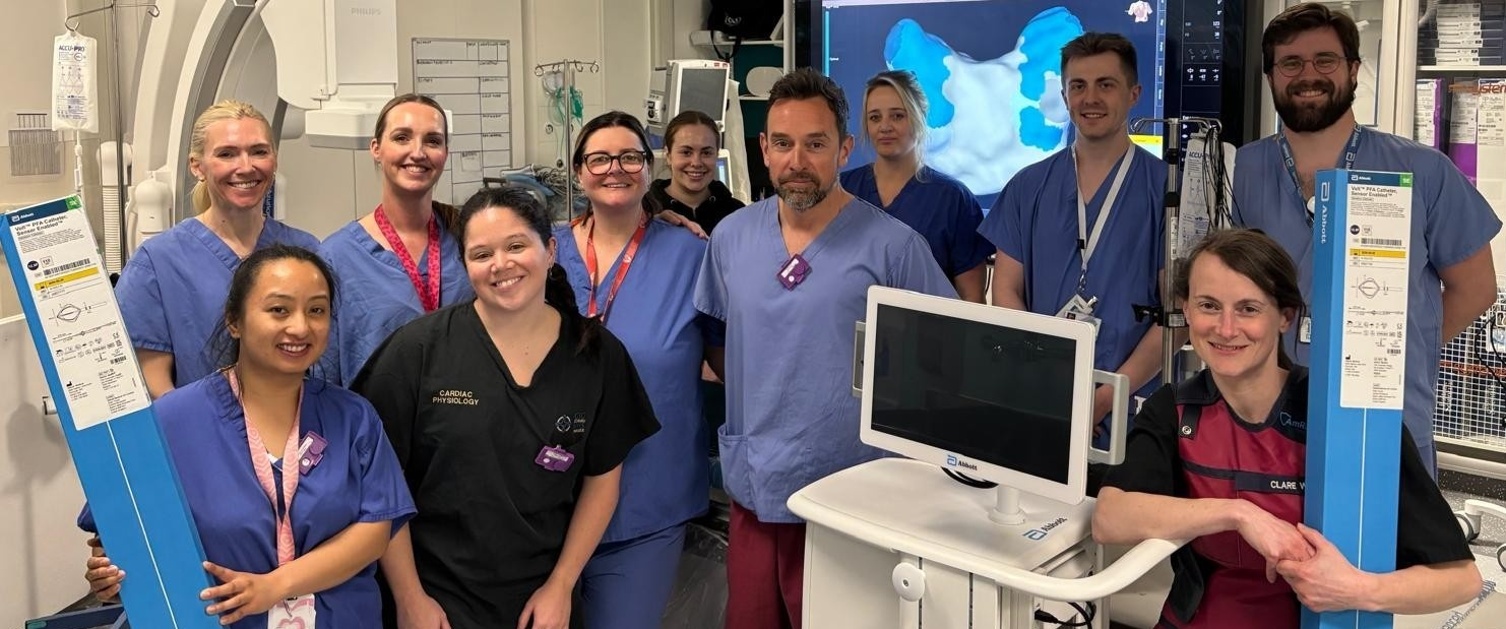
Morriston Hospital’s cardiology department has broken new ground by becoming the first in Wales to perform an innovative, potentially lifesaving, procedure.
The team, led by Consultant Cardiologist and Electrophysiologist, Dr Dewi Thomas, successfully treated an Atrial fibrillation (AF) patient using new cutting-edge technology called Pulsed Field Ablation (PFA).
AF, which affects around 2 million people in the UK, results in an irregular and often abnormally fast heart rhythm leading to symptoms such as fatigue, heart palpitations, trouble breathing and dizziness. If untreated, the condition increases the risk of blood clots, stroke and heart failure.
The new all-in-one system, known as Volt, employs a technique that destroys targeted malfunctioning heart cells using ultrafast electrical pulses.
As well as benefitting patients it is hoped the procedure will, in time, reduce waiting lists and save money for the health board.
Dr Thomas said: “At present these procedures are being performed under general anaesthetic, but experience from other centres suggests it’s possible to perform Volt PFA with the patient awake and sedated.
“This will result in even shorter procedure times in future, allowing us to treat more patients on an operating list, reducing waiting times for patients and saving money for the health board.”
When medication or other treatments fail, many patients turn to invasive cardiac ablation procedures, which up until now have been performed using thermal energy; either heating or freezing tissue, however, there are some limitations and risks associated with these treatments, in particular the capacity to cause collateral injury to structures surrounding the heart.
The Volt system, developed by healthcare company Abbott, is designed to overcome some of the limitations of traditional thermal ablation, thus helping to eliminate the risk injuring healthy adjoining tissue, which represents a major step forward in both patient safety and procedural efficiency.
Dr Thomas said: “Atrial fibrillation is a very common problem and can have serious repercussions for patients, and this is a very powerful tool and addition to our armoury in our battle against AF.
“It won’t completely replace our current approaches to AF ablation, which we’ve been performing very safely and effectively for many years, but there are certain patient groups which certainly stand to benefit from this new procedure.
“AF ablation as a treatment has been around for over 20 years, and as with any procedure, over time it becomes refined to improve safety and produce better outcomes for patients. The Volt PFA system represents a milestone in that evolution and we’re really pleased and proud to bring it to Wales, and to be one of earliest adopters of this technology in the UK.”
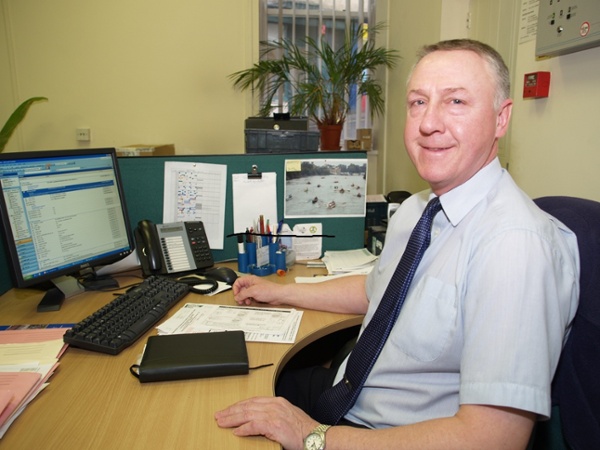
Glynne Morgan (pictured below), who lives near Haverfordwest, was the first patient to benefit from the new procedure.
Explaining his diagnosis, he said: “I gather a lot of people live with AF without knowing until something flares up. It can be fatal if not corrected. It can lead to strokes or heart attack.
“I had the flu over Christmas a couple of years ago and then, afterwards, I was having chest pains. They performed an ECG and informed me that I had AF - that sort of kicked the ball rolling really.
“A lot of people notice that they are in AF because they can feel it in their chest, they can feel the rhythms increasing. I've never felt that.
“My symptoms were, I'd get out of breath performing the simplest things like showering and I'd be out of breath drying off afterwards and also fatigued - I could sleep most of the day. I couldn't do the sort of outdoor things that I used to do, like gardening or cutting the grass.
“I used to do a lot of sports, cycling, swimming, running. I just couldn't even do anything like that at all.”
Following the successful intervention, Mr Morgan was full of praise for Dr Thomas and his team.
He said: “I've been under the hands of Dr Thomas for quite a while. He, the anaesthetists, and the pre and post team were excellent.
“I mean, all credit to the NHS, to be honest. Everything was explained fully through. There wasn't any one time I was nervous about the procedure, even though it was a new form of ablation.
“It was all explained to me beforehand. From everything under Dr Thomas right throughout his team to the nurses, it was really exceptional.
“And, it was very straightforward, no pain, and I hope it becomes the standard format for future heart ablations for other heart sufferers.
“It's like a weight has been lifted off my chest. I've been so much better. My wife's been walking the dogs for me because I wasn't even able to do that - she's glad I can get back to walking them now!”
Pic caption: From left to right. Monica Angeles (front) (nurse), Melissa Madden (nurse), Lizzie Murphy (nurse), Eve Burns-Thomas (cardiac physiologist), Anne-Marie Davies (nurse), Tamsin de Bude (back) (nurse), Dr Dewi Thomas (Consultant Cardiologist), Emily Church (radiographer), Sam Peddie + Harry Mahoney (back) (Abbott technical support), Claire Warren (front right) (Lead cardiac physiologist)
Rydym yn croesawu gohebiaeth a galwadau ffôn yn y Gymraeg neu'r Saesneg. Atebir gohebiaeth Gymraeg yn y Gymraeg, ac ni fydd hyn yn arwain at oedi. Mae’r dudalen hon ar gael yn Gymraeg drwy bwyso’r botwm ar y dde ar frig y dudalen.
We welcome correspondence and telephone calls in Welsh or English. Welsh language correspondence will be replied to in Welsh, and this will not lead to a delay. This page is available in Welsh by clicking ‘Cymraeg’ at the top right of this page.