Swansea Bay oncologists lead world first radiotherapy trial for patients with inoperable stomach cancer
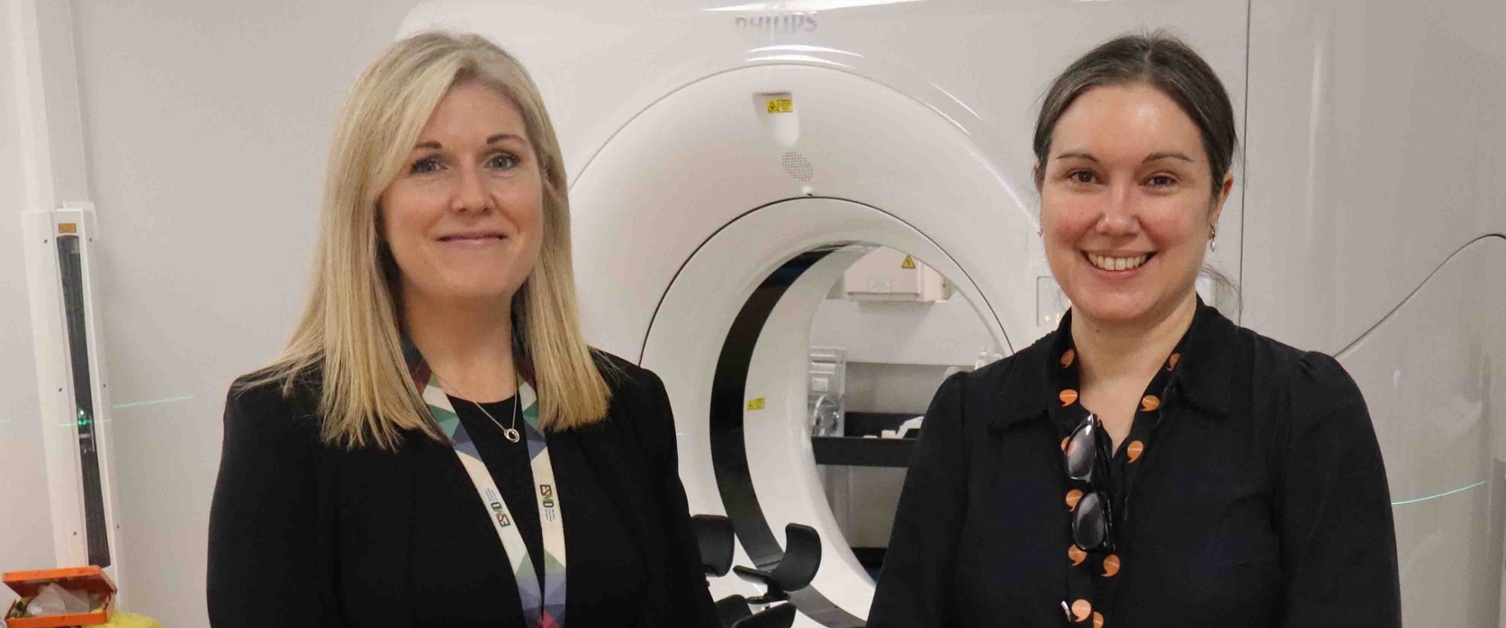
Two Swansea Bay oncologists are leading a worldwide first trial of a new way of giving radiotherapy to patients with inoperable stomach cancer.
The clinical trial, GastroSCOPE, will investigate whether radiotherapy, given earlier and at a higher dose than current practice, will slow down stomach cancer progression and, by delaying or preventing symptoms, improve patients’ quality of life.
Funded by a £3 million grant from Cancer Research UK, the randomised trial will include 558 patients recruited across 28 centres. It will compare standard treatment with and without higher-dose radiotherapy.
(Main image above shows Dr Amy case, left, and Dr Sarah Gwynne)
It was the brainchild of Dr Sarah Gwynne, consultant clinical oncologist at the South West Wales Cancer Centre in Swansea’s Singleton Hospital.
“The CRUK funding will allow us to answer a question I have been asking for the last 14 years as a consultant,” said Dr Gwynne.
“That is, how can be bring the benefits of radiotherapy seen in other cancers into the treatment of patients with inoperable stomach cancer?
“Much has changed in 14 years. We have better drug treatments and advances in radiotherapy techniques. But we still don’t know how and when to combine them to treat this disease.”
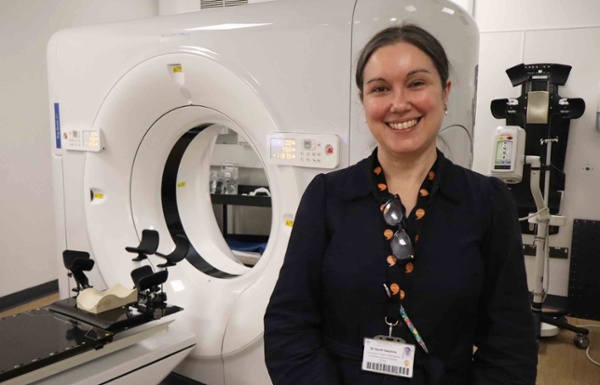 Surgery is the only curative treatment for stomach cancer, but not all patients are able to undergo surgery.
This could be due to the location or extent of the cancer, making it difficult for the surgeon to remove.
Sometimes it is due to the patient having other medical problems which mean it would not be safe for them to have such a big operation. Other patients decline surgery.
Treatment options for them include chemotherapy and immunotherapy, low dose radiotherapy, or supportive care.
When stomach cancer is not controlled, it can lead to distressing symptoms such as bleeding, blockage, or pain.
Radiotherapy is currently given in small doses, often a single dose, to help manage symptoms after they occur rather than before they happen to try to prevent them.
“From the limited information available, we believe higher doses of radiotherapy over a number of treatments could help control the cancer for longer and stop distressing symptoms occurring,” said Dr Gwynne.
“But we do not know this with enough certainty to change what we currently do. The best way of knowing if one treatment is better than another is by carrying out a randomised controlled trial.
“This is where patients are randomly allocated to one of two groups. One group has the new treatment and the other the standard treatment, to see which treatment works best.”
Dr Gwynne received funding from Health and Care Research Wales to help develop the trial along with Dr Amy Case. Dr Case, also a consultant clinical oncologist in Swansea, was a clinical research fellow at that time, part funded by Wales Cancer Research Centre.
Dr Gwynne and Dr Case are the co-chief investigators for the clinical trial. Dr Chris Jones from the University of Cambridge will lead the scientific research to determine whether radiotherapy causes changes in the tumour cells that make them more responsive to certain drug treatments.
GastroSCOPE will be the world’s first randomised clinical trial looking at the role of radiotherapy in this setting – and the UK’s first stomach radiotherapy study.
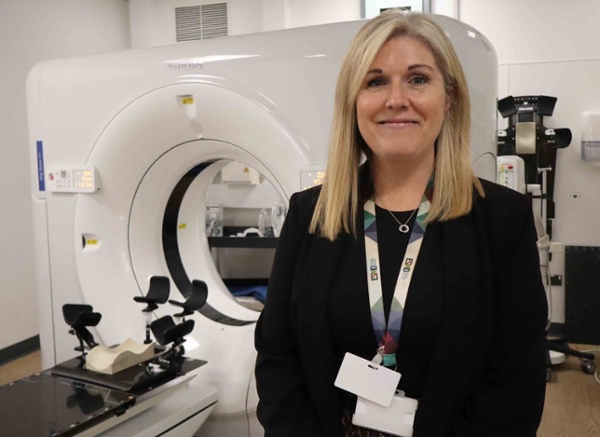 As well as evaluating clinical outcomes, the research team will investigate advanced imaging techniques to help plan radiotherapy more accurately. They will also explore tumour biology and blood markers to help understand why some people respond better to treatment than others.
“It will probably be another 12 months before the first site is open and the first patients are recruited,” said Dr Gwynne, who has been involved in several high-profile clinical trials in oesophago-gastric cancer in the UK.
“We have had around 30 sites express an interest in opening the trial, across all four UK nations.
“It could potentially lead to us being able to offer more treatment options to patients and improve their symptoms, life expectancy, and quality of life. It is very exciting.”
Dr Case said she was grateful to Dr Gwynne and the Wales Cancer Research Centre for supporting her as an early-career researcher – which in turn led to her involvement with the GastroSCOPE trial.
She added: “It is very exciting to be part of a trial that has the potential to transform the treatment landscape and improve outcomes for patients across Wales, the wider UK, and around the world who are living with gastric cancer.”
Rydym yn croesawu gohebiaeth a galwadau ffôn yn y Gymraeg neu'r Saesneg. Atebir gohebiaeth Gymraeg yn y Gymraeg, ac ni fydd hyn yn arwain at oedi. Mae’r dudalen hon ar gael yn Gymraeg drwy bwyso’r botwm ar y dde ar frig y dudalen.
We welcome correspondence and telephone calls in Welsh or English. Welsh language correspondence will be replied to in Welsh, and this will not lead to a delay. This page is available in Welsh by clicking ‘Cymraeg’ at the top right of this page.