Specialist nurses play crucial role in caring for vulnerable people at home
Specialist nurses have helped to keep vulnerable people well at home by delivering hundreds of vaccinations to those who are housebound in parts of Swansea.
Laura Williams and Rachel Woollacott are both chronic conditions nurses within Bay Health Local Cluster Collaborative (LCC).
Between them, they cover the western areas of Swansea including Sketty, Uplands and Mumbles, as well as most of the Gower peninsula, visiting the homes of patients who can’t get to their GP practice.
During their visits, they carry out assessments and reviews for patients living with a chronic condition, such as diabetes, asthma, chronic obstructive pulmonary disease (COPD) and more, with the aim of preventing potential hospital admissions.
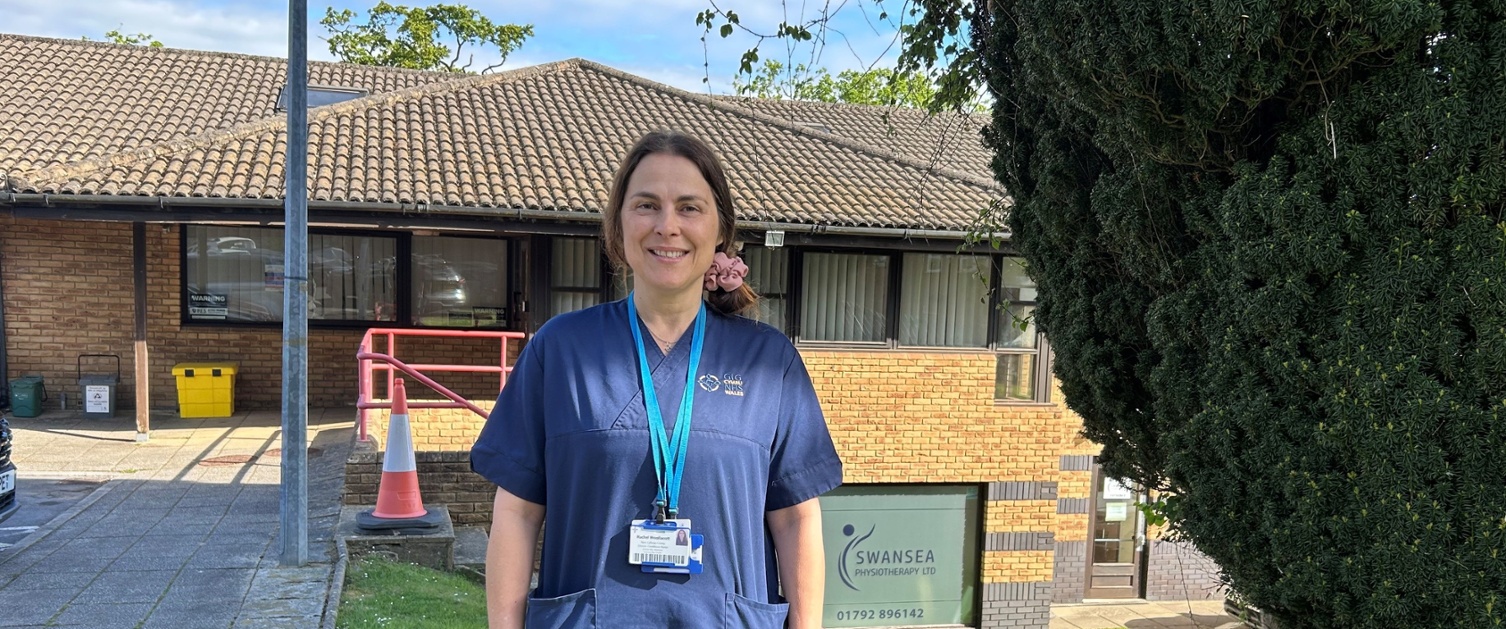
Pictured: Chronic conditions nurse Rachel Woollacott.
But they also play a crucial role when it comes to vaccinating hundreds of housebound patients too.
During the most recent flu season, Bay Health LCC vaccinated the highest number of its patients aged 65 and over, clinically at-risk patients aged 65 and under, and children aged two to three, compared to the other health board areas.
Much of the cluster’s success is credited to Laura and Rachel’s efforts in vaccinating patients in their own home who aren’t able to go to their GP practice.
“We are given a list of patients who are eligible to be vaccinated,” Laura said.
“We contact our housebound patients to arrange a suitable date and then go out and vaccinate them against flu and Covid.
“As well as the housebound patients, we can also vaccinate their carers or family members who have difficulty leaving at home.
“Our patients appreciate us being able to vaccinate them at home and they are keen to be vaccinated, especially with carers and visitors going in and out of their home."
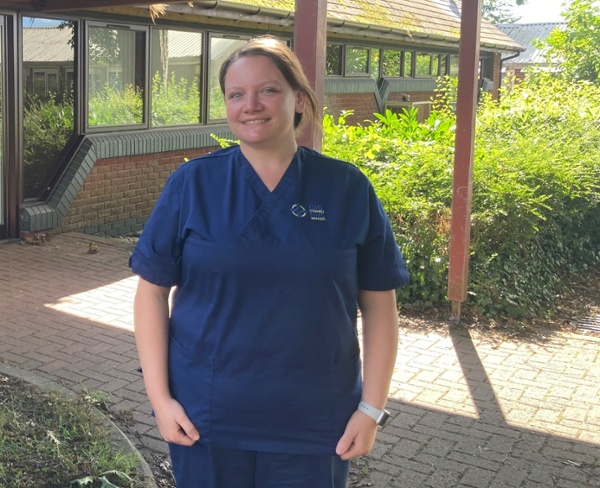
Pictured: Chronic conditions nurse Laura Williams.
People with a chronic condition need annual reviews so they can be monitored to ensure they are receiving the appropriate treatment or medication.
“We cover quite a lot of conditions,” Rachel said.
“We do reviews for asthma, diabetes, COPD, frailty, dementia, hypertension, chronic kidney disease, heart failure, and more.
“If everything is stable with the patient then we can manage their care alongside the GP. But if they’re not stable then we can link in with the relevant services for their condition so more support can be provided.”
Rachel and Laura both cover specific GP practices each to assist with continuity of care.
They also carry out frailty reviews and fall assessments on appropriate patients, to help prevent any potential deterioration.
Rachel added: “Our role is always evolving to help keep people well at home and prevent hospital admissions.
“Some people within our elderly population have got multiple long-term conditions.
“We have been doing a lot more initial diagnostics for people with memory problems and then bringing it to the attention of the GP so they can be referred on for further assessment and diagnosis.
“We also do fall assessments with the aim of preventing falls, as well as frailty reviews too.
“It’s about making every visit count and trying to make sure that if a patient has got multiple conditions, we review all or most of them in the same visit to help reduce the likelihood of other visits in the near future.”
They also work closely with the health board’s virtual wards service, which provides wraparound support in the community to people with complex health and social needs.
Patients receive face-to-face care in the comfort of their own homes, rather than being on a hospital ward.
“We sit in on the virtual ward discussions to identify appropriate patients who have come into the virtual ward service who we could support,” Rachel said.
“Perhaps a patient has recently become housebound and they have multiple conditions and are at risk of falling, for example.
“We can support those patients once they have been discharged, so they can receive that extra care from us.”
Bay Health LCC lead Dr Nicola Jones said: “The chronic conditions nurses have worked tirelessly to help the flu vaccination campaign.
“Their ability to vaccinate the housebound patients has increased this vulnerable group’s access to timely healthcare and freed up other cluster staff to vaccinate the ambulatory population at pace.
“Together these factors have helped Bay Health Cluster have the highest flu vaccine coverage in the health board.”
Rydym yn croesawu gohebiaeth a galwadau ffôn yn y Gymraeg neu'r Saesneg. Atebir gohebiaeth Gymraeg yn y Gymraeg, ac ni fydd hyn yn arwain at oedi. Mae’r dudalen hon ar gael yn Gymraeg drwy bwyso’r botwm ar y dde ar frig y dudalen.
We welcome correspondence and telephone calls in Welsh or English. Welsh language correspondence will be replied to in Welsh, and this will not lead to a delay. This page is available in Welsh by clicking ‘Cymraeg’ at the top right of this page.