Rapid result test helps GP practices reduce unnecessary antibiotics
A simple diagnostic test has been helping GP practices across Swansea Bay to significantly reduce unnecessary antibiotic prescribing.
The rapid result test is used for patients with suspected respiratory infections to help clinicians determine whether they need antibiotics.
Reducing the amount of unnecessary antibiotics prescribed can help to reduce the risk of antimicrobial resistance, which can make some infections more difficult to treat in the future.
Patients undergo a finger pinprick test at their surgery, with the result provided within minutes.
Swansea Bay’s Local Cluster Collaboratives (LCCs) pooled funding to trial a project across 11 GP practices to evaluate the effectiveness of using the test.
Some practices saw a 16 to 21 per cent reduction from the expected prescribing position over the 18-month study period.
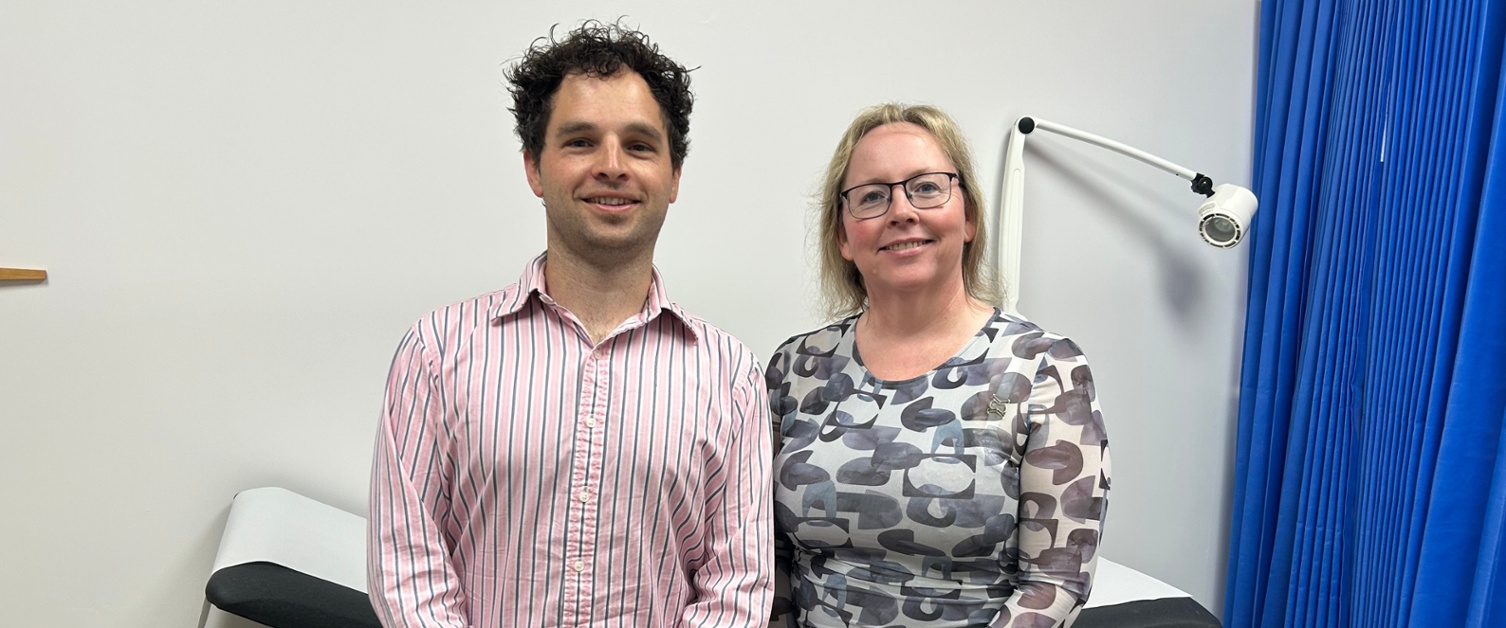
Pictured: Dan Robbins, medication safety officer and clinical pharmacist, and Dr Charlotte Jones, health board’s clinical lead for antimicrobial stewardship.
The test determines if a patient’s infection is bacterial or viral, with the latter not requiring antibiotics.
Dr Charlotte Jones is a GP partner at Uplands and Mumbles Surgery and the health board’s clinical lead for antimicrobial stewardship.
She said: “Having access to diagnostics in the community can help with clinical decision making.
“The test also helps us to be more prudent about antibiotic prescribing, because we know they can be harmful.
“We want to make sure we are only using them where we have to because the more we use them, the less effective they become.”
The 11 GP practices were spread across Swansea and Neath Port Talbot so the impact of the test could be assessed in different areas.
Staff received either new or refresher training based on whether they had previously used the machines.
“We saw a reduction in antibiotic prescribing, which is very positive for our safe antibiotic prescribing agenda in terms of reducing resistance,” Dr Jones added.
“Clinicians consistently described the test as a valuable diagnostic tool, not only for confirming bacterial infections, but also for confidently ruling it out so therefore reducing unnecessary prescribing.
“Practices that were able to seamlessly embed the testing into their clinical practice were able to make reductions above and beyond the reductions seen across the health board.
“That illustrates the impact these tests can have in the fight against antimicrobial resistance.”
In addition to the tests having a positive impact among the GP practices, they were also well received by patients too.
“We received more than 500 responses from patients,” Dr Jones said.
“Many reported that they had a better understanding of why they weren’t given antibiotics.
“Whereas before many patients expected to get antibiotics if they had a chesty cough, for example, now they understand you don’t always need them.”
The hope is that more GP practices can use the test to help reduce the risk of antimicrobial resistance in the future.
Dan Robbins, medication safety officer and clinical pharmacist in Swansea Bay, said: “Antibiotics are one of the most important medicines that we have. Unfortunately, we are using far too many of them.
“As a result, harmful bacteria are quickly learning to overcome them. This is a massive global concern, that requires a strong and united response.
“If we do not contain antimicrobial resistance, we will lose one of our most important medicines, and with it, many of medical advancements that many of us will depend on at some point in our lives.
“This initiative allows clinicians to make more informed prescribing decisions, allowing us to use antibiotics when we need them, and to spare them when we do not.
“It also allows clinicians to start conversations about antimicrobial resistance and antimicrobial stewardship where there may be an expectation for antibiotics from patients.”
Rydym yn croesawu gohebiaeth a galwadau ffôn yn y Gymraeg neu'r Saesneg. Atebir gohebiaeth Gymraeg yn y Gymraeg, ac ni fydd hyn yn arwain at oedi. Mae’r dudalen hon ar gael yn Gymraeg drwy bwyso’r botwm ar y dde ar frig y dudalen.
We welcome correspondence and telephone calls in Welsh or English. Welsh language correspondence will be replied to in Welsh, and this will not lead to a delay. This page is available in Welsh by clicking ‘Cymraeg’ at the top right of this page.