Study into cancer super-survivors could lead to more effective treatments
Super-survivors who have defied the odds after being diagnosed with aggressive cancers are joining an international study that could lead to more effective treatments in future.
The South West Wales Cancer Institute at Swansea’s Singleton Hospital is one of just 17 UK oncology centres involved in the Rosalind study and recruited the first patient in Wales.
The study focuses on people who have survived extensive stage small cell lung cancer, metastatic pancreatic ductal adenocarcinoma, or a form of brain cancer called glioblastoma, for more than five years.
Swansea is participating in the pancreatic and glioblastoma arms and has recruited two and three patients respectively for each.
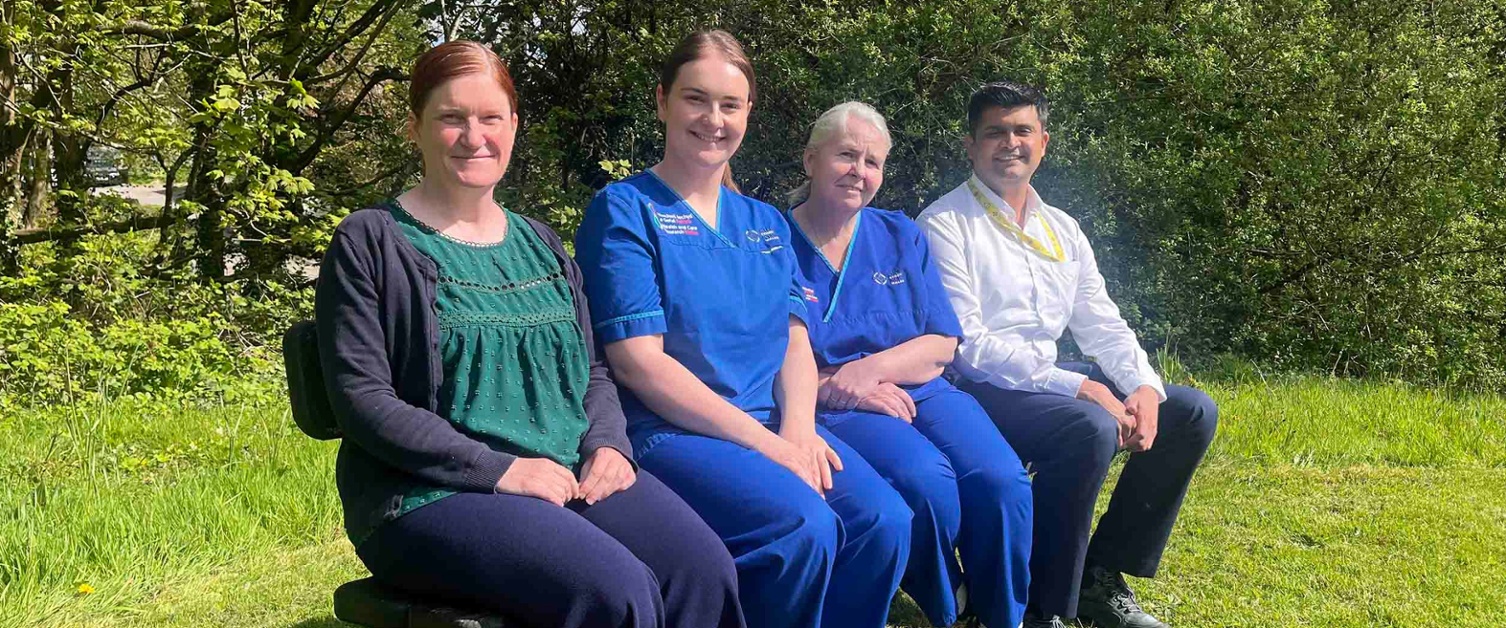
(Main picture above shows, left to right: research facilitator Nicola Lemon, research nurses Rebecca Griffiths and Esther Reeves, and specialist grade oncologist Prashanth Kainthaje Bhat)
Led by French techbio company Cure51, the study seeks to uncover biological factors contributing to exceptional, long-term survival.
This will potentially unlock insights that could pave the way for better treatments.
It involves sending tissue samples, previously collected from patients as part of their diagnosis and treatment, to Cure51 for analysis.
Swansea Bay neuro-oncologist Dr Prashanth Kainthaje Bhat said: “Over many decades we have seen improvements in cancer outcomes in most cancer sites.
“For example, some cancers had very poor prognosis years ago, but we are now seeing patients have much better outcomes.
“But with certain cancers there have not been new treatments and outcomes remain very poor.
“However, we know from our experience including previous clinical trials in these cancer sub-sites, that there is a small group of patients who have an exceptional outcome.
“Glioblastoma median survival is around 15 months, even with complete surgery, radiotherapy and chemotherapy. But around five per cent of patients can survive many years. We see it in our service.
“So this study is looking at this cohort of patients as to why, in cancers with such poor outcomes, these patients are surviving longer.”
Patients do not have to do anything to participate, other than provide consent after details of the study are explained to them. But it is not just their tissue samples that have to be collated.
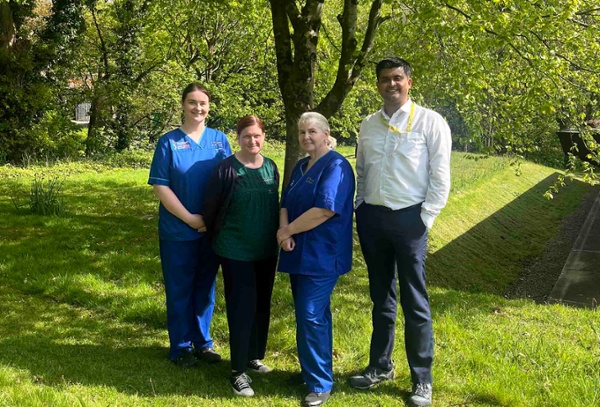 Research nurse Rebecca Griffiths explained: “We also go through every cycle of treatment these patients have had and what their blood results were before each cycle.
“We send their GP records, any past medical history, all medications they were on, lifestyle factors, any family history of cancer, smoking, alcohol, and things like that. This provides Cure51 with a whole picture of them.”
The Cancer Institute carries out a range of oncology and haematology studies, with Singleton’s South West Wales Cancer Centre providing the infrastructure and the specialist clinicians who run the trials.
There can be 30 trials running at any one time. Many have led to huge strides in cancer treatments, with Swansea’s success in recruiting patients making it one of the UK’s leading sites.
Three new groups of patients will shortly be recruited for the next stage of Rosalind. This will focus on metastatic colorectal cancer, triple negative breast cancer and non-small cell lung cancer.
Again, the Cancer Institute will be participating. Dr Bhat said: “The South West Wales Cancer Centre is a small to medium centre serving a population of just under a million.
“We do not have many patients to recruit compared to big centres, but we need to ensure there is a heterogenous group of patients from across the globe in this study.
“It shouldn’t just recruit from big centres, from urban centres, from areas with higher socioeconomic status. To get true answers it has to recruit from all across them wherever possible.
“Our motivation to be involved is because our centre will represent a unique population which is quite rural but also a population which was previously quite industrial.
“That’s the motivation for the whole team here to be involved with this study, even if the numbers are relatively small.”
Rydym yn croesawu gohebiaeth a galwadau ffôn yn y Gymraeg neu'r Saesneg. Atebir gohebiaeth Gymraeg yn y Gymraeg, ac ni fydd hyn yn arwain at oedi. Mae’r dudalen hon ar gael yn Gymraeg drwy bwyso’r botwm ar y dde ar frig y dudalen.
We welcome correspondence and telephone calls in Welsh or English. Welsh language correspondence will be replied to in Welsh, and this will not lead to a delay. This page is available in Welsh by clicking ‘Cymraeg’ at the top right of this page.