Dedicated team helping substance use mums to be turn their lives around
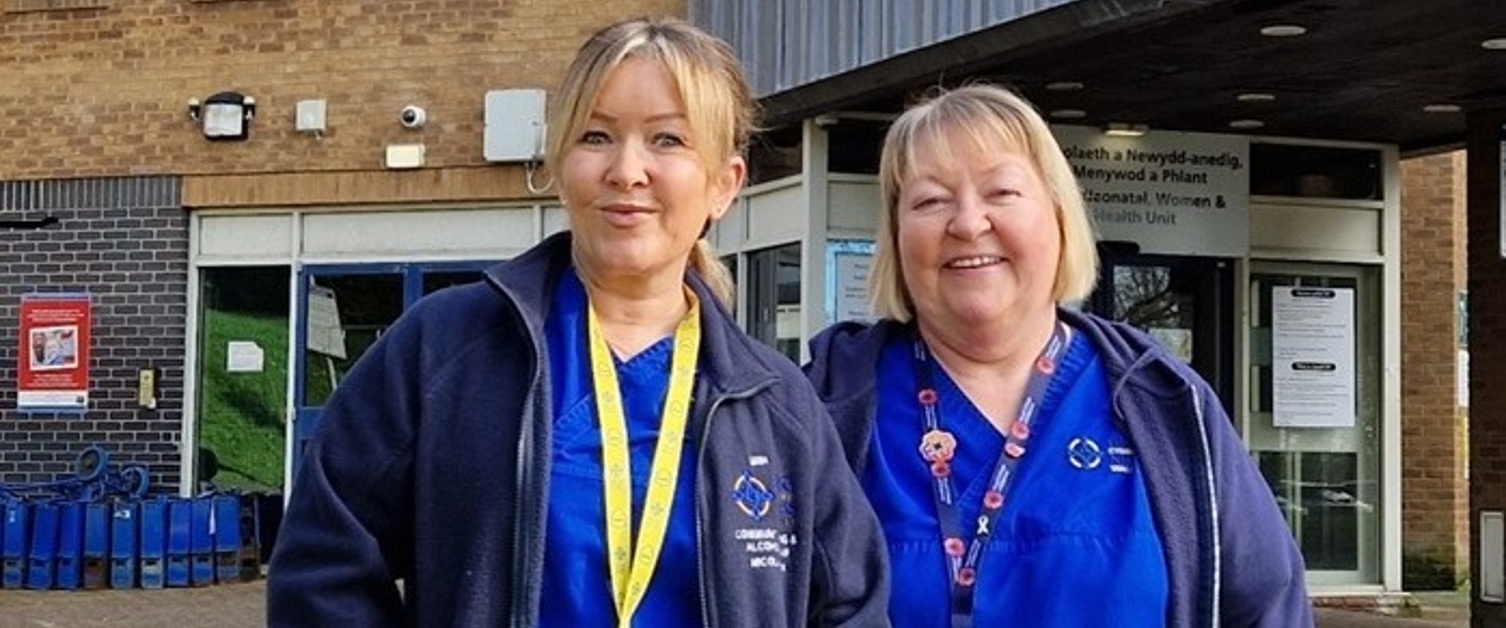
Homelessness and drug addiction are by no means conducive to bringing a new life into the world, but a small team of dedicated clinicians are a beacon of light in the darkness for some at-risk mums-to-be.
Last year alone Swansea Bay’s Substance Use Antenatal Team helped around 150 pregnant women in the grip of addiction in one form or another.
The multidisciplinary team, made up of a consultant obstetrician, specialist midwife, and a clinical nurse specialist in pregnancy, has won plaudits for its work providing specialist support for pregnant women experiencing addiction, particularly opiate addiction. It is being held up as a shining example for the whole of Wales to follow.
The team were recently invited to share its work at the Wales Addiction Conference for psychiatrists, winning an award for the best poster presentation.
Feedback from the mothers they have helped has been very positive, with one saying:
“I really enjoyed working with you all. You attended all of my meetings with social services and I want you to know that it means so much and thank you for believing in me and motivating me.
“All the work you put in allowed me to keep my daughter in my care. We are doing really well and will continue to do so. I could never thank you enough. You helped my social worker believe and trust me to give me a chance to prove to them that I could be a good mum.
“Thank you for all of your support with my recovery and help to keep my daughter, I am so grateful. You made a massive difference, you really stuck by me.”
At the heart of the team is Ann Saunders, a specialist midwife in substance use, who set up the team in 2009. Alongside her is clinical nurse specialist in pregnancy, Nicola Cook, who has spent the last 26 years working within the health board’s Community Drug and Alcohol Team.
Nicola said: “We went to the Wales Addictions Conference in Cardiff. It was an addictions conference for psychiatrists, but we were asked to go because they were interested in the work that we do in Swansea Bay.
“We run a substance use antenatal clinic every Wednesday here in Singleton Hospital and every Thursday in Neath Port Talbot Hospital, with a consultant obstetrician, a midwife and substance use nurses.
“Last year we dealt with around 150 women who came through our specialist antenatal clinic, so it's quite a busy clinic.”
The team has over the last few years introduced a new method of helping their clients tackle opiate addiction aside from methadone or oral buprenorphine.
Nicola said: “We've changed the way that we treat some of the women in that we now prescribe them an injectable opiate replacement therapy - instead of a woman having to go to the pharmacy every day to drink her methadone, she can now come to the Community Drug and Alcohol Team and receive a monthly injection of Buvidal.
“That obviously works much better - there's better outcomes for the babies, less severe neonatal abstinence syndrome and lower rates of preterm birth.
“The research that we did on prescribing Buvidal won the competition.”
As you would expect, with 26 years of service under her belt, Nicola is very passionate about her job.
She said: “It's a passion of mine, working with pregnant women, getting them to engage, getting them to come to clinic, building up a therapeutic relationship.
“We sometimes see women that get pregnant time and time again. Sometimes women completely change their lives when they become pregnant.
“Sometimes they don't. It depends really if somebody continues to ‘use’ throughout the pregnancy, then that obviously affects some of the outcomes as to whether that mother can parent her child or whether she might need some extra support with social services.
“Sometimes the baby goes on the child protection register and sometimes the baby needs to go into foster care or sometimes the mother and baby go to a placement together, so that the mother can be assessed in her parenting ability.
“It's a very complicated picture often with complex women that we're dealing with.”
The whole team is proud of being able to offer a supportive non- judgemental approach to the women in their care.
Nicola said: “I think a big strength of our clinic is that we pride ourselves on being totally non-judgmental - we treat women with respect. That's massive really.
“I like to treat everybody the same, no matter what background they come from. A lot of these women have been through traumatic events in their lives, and sometimes it's the first time in their lives where they've experienced a bit of kindness, that they've experienced care.”
The team is buoyed by the response of the women they care for.
Nicola said: “The feedback we get from women is that they feel really comfortable in our clinic and they like coming in.
“When they get their baby scanned - they always love to see their babies on the screen - they come into the room, with its a multidisciplinary team, and they feel listened to, they don't feel judged and they feel heard. I think that's really important. I think that's why our clinic works so well, it’s that non-judgmental attitude that we all have.”
While the outcomes aren’t always the happiest of the times, when lives are completely turned around it makes the job all the more worthwhile for Nicola and her colleagues.
She said: “We've had women that have been injecting drugs, they've been homeless, they've been out of work and then they find out they're pregnant and that's when they come for help. They want to turn their lives around.
“A lot of organisations will get involved and its teamwork, it's getting the prescription right, getting housing, getting the midwives involved and that really helps.
“For somebody to go from being homeless, using substances, to not using substances, getting housed and bringing their baby home. It's a long, hard journey, but it's one that can be achieved - if the woman wants it.
“The reward of seeing women turning their lives around, and not just the women, sometimes it's the fathers as well, that’s so rewarding. That's what keeps me coming to work, seeing that we're making a difference to a person's life. That's a real buzz. It doesn't always happen, but when it does, it's very rewarding.”
Ann Saunders, who has been with the team since its inception, added: “It’s a vital service. We find the numbers are up year on year, but the women are becoming really complex and they need to have specialist care.
“I’ve always worked with challenging clientele and I enjoy it. I couldn’t do anything else.
“It’s a special moment for us when you see a new mum turn their life around because it doesn’t happen very often. We really feel that we have accomplished something when mum and baby are together and they are sorting their lives out. It’s a great feeling.”
Rydym yn croesawu gohebiaeth a galwadau ffôn yn y Gymraeg neu'r Saesneg. Atebir gohebiaeth Gymraeg yn y Gymraeg, ac ni fydd hyn yn arwain at oedi. Mae’r dudalen hon ar gael yn Gymraeg drwy bwyso’r botwm ar y dde ar frig y dudalen.
We welcome correspondence and telephone calls in Welsh or English. Welsh language correspondence will be replied to in Welsh, and this will not lead to a delay. This page is available in Welsh by clicking ‘Cymraeg’ at the top right of this page.