Swansea Bay University Health Board: Climate Action Plan 2026-30
Foreword
I am proud to be able to introduce Swansea Bay University Health Board’s (SBUHB) third plan responding to the Climate Emergency. This plan sets out a cohesive approach to decarbonisation and climate resilience, positioning the Health Board to meet future challenges while delivering on national priorities. It is aligned with the NHS Wales Decarbonisation Strategic Delivery Plan (2025) and the Climate Adaptation Strategy for Wales (2024), ensuring an integrated response to their interconnected objectives.
 This Climate Action Plan highlights the amazing work undertaken over the last 24 months including our incredible staff led initiatives, our Green Group, initiating climate adaptation work, and the Sustainability Clinical Leads who are driving substantial change. We know a healthier, greener, and brighter future for the staff and people of Swansea Bay is possible.
However, we also recognise that we are at a critical point in history with the impacts from climate change being felt quicker and more severely than previously predicted. This is reflected in record increases in the price of coffee, chocolate, and olive oil; a rise in the number of named storms; drought declarations across parts of Wales; and 13 days over 25°C in Swansea and Neath Port Talbot during summer 2025.
We are committed to A Healthier Swansea Bay - Swansea Bay University Health Board recognising that climate change impacts could prevent us meeting this. Therefore, as a Health Board we must work collaboratively across NHS Wales and with local partners and communities to build resilience through a population health approach. This means understanding how these efforts can drive value by reducing cost, improving patient experience, and minimising waste. Giving our staff ‘Permission to Act’ is key in building a sustainable and climate resilient healthcare system.
The health impacts caused by the climate emergency demand bold and decisive action from all of us if we are to truly thrive. I remain committed to empowering our teams to build on their successes and to working in close partnership with Welsh Government and our stakeholders to deliver the transformative change we require.
Abigail Harris
Chief Executive Officer, Swansea Bay University Health Board
Aim and objectives
Aim: To build the Health Board’s climate resilience across the four roles: ‘Healthcare provider’, ‘Employer’, ‘Major local organisation’, and ‘Productive Partner’ , as defined in ‘A Healthier Swansea Bay - Swansea Bay University Health Board’.
This will be achieved through reducing emissions and developing a proactive approach to climate adaptation. The objectives of this plan include:
- Build adaptive capacity and understanding of low-carbon models of care
- Build the evidence and data base around climate risk and opportunity gaps
- Build emissions reduction and climate adaptation into existing processes
- Continue reducing emissions from our buildings and estate
- Enhance sustainable procurement and waste reduction
- Improve biodiversity on sites to benefit staff, patients, and local environments
- Work collaboratively across NHS Wales and wider system to ensure that adaptations between organisations are not conflicting
Why climate and health
Climate and health are inseparable, climate change is already harming population wellbeing and placing increasing pressure on health and care systems. The plan highlights that Wales is experiencing hotter summers, warmer wetter winters, more storms, flooding, and degraded air quality, all of which directly impact health. Rising temperatures increase risks of heat stress, dehydration, cardiovascular strain, and respiratory illness, while wetter winters worsen mould‑related illness, injuries, and hospital demand. Extreme weather disrupts services, damages infrastructure, and affects staff ability to work safely, as seen through clinic closures, power failures, and supply chain interruptions.
Climate change also threatens food security, water availability, housing quality, and transport systems, amplifying inequalities. Vulnerable groups, including those on low incomes, older adults, children, pregnant women, outdoor workers, and people with chronic conditions, face disproportionate risks. These intersecting vulnerabilities make climate change the greatest health challenge for Wales.
Addressing climate change brings significant co‑benefits: cleaner air, healthier diets, increased physical activity, improved mental wellbeing, and greater community resilience. Understanding the climate–health link is therefore essential for prevention, safeguarding population health, ensuring service resilience, and enabling the NHS to continue delivering safe, sustainable care in a rapidly changing climate.
The Health Board is well‑positioned to address climate and health challenges through its strong foundations, leadership, and experience in both mitigation and adaptation. Significant progress has been made across estates, clinical services, procurement, transport, and staff engagement, supported by Sustainability Clinical Leads and an active Green Group. Existing partnerships, including Public Services Boards, NHS Wales networks, and Welsh Government, create a coordinated, system‑wide approach.
Further to this, embedded business continuity processes, digital innovation, and preventative public health work further strengthen resilience. Together, these capabilities mean the Health Board can act early, influence widely, and drive sustainable, climate‑resilient care across Swansea Bay.
 Our journey so far
The period from April 2024- March 2026 has been challenging, with financial and resource constraints across the organisation. Despite these pressures, significant progress has been made, particularly in clinical areas, through the introduction of Sustainability Clinical Leads roles, the expansion of Green Group membership, and strengthened support for All-Wales networks for Critical Care, Emergency Departments and Primary Care.
Key successes include:
- Regular communications to staff, including two weeks where climate and sustainability are the focus
- Inclusion of sustainability and climate change in the induction handbook for new starters
- Working with public transport providers to improve connectivity e.g. Singleton to NPT Hospital service
- Independent Member champion
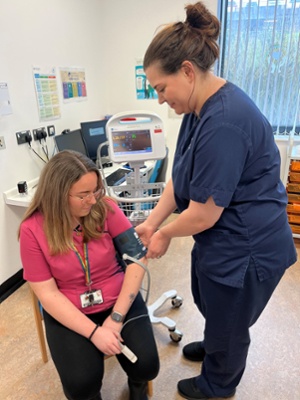
- Investigations into items move from single use to reusable, first item executed blood pressure
- Embedded into the Research and Development protocol through Well Being of Future Generations Act
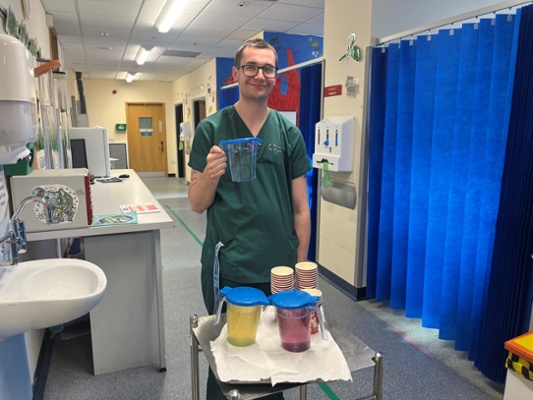
- Development and implementation of a Healthy and Sustainable Catering Plan
- Delivery of bespoke training to Digital, Strategic Partnerships, Managers Pathway, & Lymphoedema
- Nominated leads in Infection Prevention & Control to work with Sustainability Clinical Leads
Read about our environmental stories in our dedicated news section
Our plan
The CAP 2026-2030 builds on the systems wide approach capturing relevant legislation, policy, refreshed NHS Wales Decarbonisation Strategic Delivery Plan, findings of the Health Board’s climate change risk and opportunity assessment, work with the Public Services Boards in Swansea and Neath Port Talbot, work with NHS Wales partners from across Wales, and related Health Board activity including our amazing Sustainability Clinical Leads and the Emergency Preparedness, Resilience and Response (EPRR) team.
 Our Culture and Ways of Working
What the Health Board has done…
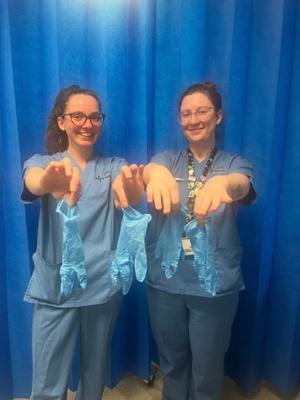
- Building sustainability into the Health Board’s Quality Improvement template
- Providing training on sustainability in nursing inductions since 2024
- Cross organisational business continuity procedures to support response to extreme weather
This plan will see the Health Board building a better understanding of what sustainable healthcare is as well as the mechanisms to achieve this, from climate adaptive capacity to the partnerships in the PSBs. Actions include:
- Embedding climate mitigation and adaptation into planning and decision-making mechanisms
- Regular communications to continue to build momentum for climate action
- Develop a workforce strategy to support delivery of the ‘Delivering sustainable healthcare: position statement,’ including climate adaptation requirements.
- Share spread and scale projects across the Health Board
- Use questionnaires to build an understanding of lived experience of Health Board staff during climate events
- Publish and share resources to support staff in delivering emissions reduction and climate adaptation
- Promote public health campaigns on climate impacts and health, including heat
- Collaborate with All Wales colleagues on addressing evidence and data gaps
- Map partners, purpose of partnership, and links with climate adaptation
- Providing updates around climate risks to support Business Continuity Plans and other resilience mechanisms
- Build understanding of areas where there may be increased demand from different population groups and how these are distributed across the Health Board / Clusters
- Build CCROA recognised risks into local risk assessments to enable ownership and accountability
- Build regional climate resilience in partnership with the PSBs (Swansea and NPT)
 Our Buildings and Estate
What the Health Board has done…
- Run an energy switch-off campaign in 2025 to encourage switching off unnecessary items
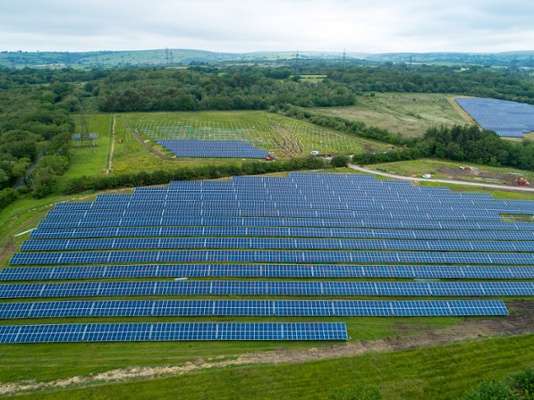
- Expansion of the solar farm in 2024 to include generation of power to 5 megawatts, with 2,000 extra panels taking the amount to 12,000 solar panels, as well as battery storage to enable excess power to be used later
- Undertaking a calendar of preventative maintenance to ensure that the sites are maintained and not subject to seasonal issues
Actions cover the buildings and estate, including how biodiversity is managed. Key actions that will be undertaken include:
- Monitor energy consumption address areas of over-consumption
- Conduct seasonal reviews of building controls to optimise efficiency
- Embed energy management practices in staffs’ day‑to‑day
- Utilise opportunities for space rationalisation
- Share scalable decarbonisation projects and measures across the NHS Wales estate
- Review electrical capacities across sites to determine limitations
- Plan and implement targeted decarbonisation projects aligned with the principles of the UKGBC Net Zero Carbon Buildings Framework
- Undertake renewable energy opportunities assessments and progress viable ones, where funding is available
- Ensure alignment with the guidance on all new buildings and major refurbishments, and report compliance where required.
- Consider increased design criteria to account for climate change temperature fluctuation
- Flood risk and climate change assessments for new leases and new capital builds.
- Review access and availability to cold drinking water for staff and patients
- Work with NWSSP Specialist Estates Services to build resilience to climate related events in buildings
This is the first time nature has been included, highlighting the way it brings climate mitigation and climate adaptation together. Actions to support nature include:
- Support localised initiatives to expand, maintain or use green spaces
- Sharing learning on green infrastructure
- Continue to run 'No mow May, maintain areas created by the Biophilic Wales project, and limiting pesticide use
- Identify how new developments can support improvements to biodiversity.
 Our Travel
What the Health Board has done…
- Encouraging staff to cycle to work during Bike Week including a free breakfast!
- Continued partner with the Healthy Travel Charter for Swansea Bay.
- Expanding the Cycle to Work scheme to run for longer
2024/25 saw staff claim for more than 4.26 million miles of travel! Ensuring our staff can access our communities is critical, as well as getting staff, patients and visitors to and from our sites. Actions to reduce the impact from this includes:
- Provide efficient or eco driving training to staff who are required to drive regularly (i.e. more than once per week) as part of their job role (including work travel in an employee-owned vehicle).
- All new owned or leased NHS vehicles will have a telematics system installed at the point of sale or lease - excluding any obtained on the salary sacrifice scheme.
- Develop an agreed approach and implementation plan to Electric Vehicle Charging Infrastructure covering:
- Fleet
- NHS Wales partners
- Other delivery partners
- Staff
- Patients and visitors
- Provision of charging for work vehicles
- Actively participate in the All-Wales Fleet and Transport Group
- Align vehicle purchasing with NHS Wales Decarbonisation Strategic Delivery Plan requirements.
- Conduct an organisational staff travel, commuting and homeworking survey to collect baseline data and identify opportunities to increase uptake in low‑carbon travel and homeworking practices.
- Develop a staff travel plan outlining an organisational approach to encouraging the Sustainable Transport Hierarchy and embedding Healthy Travel Charters across staff travel, including commuting and business travel.
- Create user‑friendly guides that map out practical low‑carbon transport options for staff and the public, including routes, accessibility details, and sustainable travel tips.
 Our Procurement
What the Health Board has done…
- Building sustainability Key Performance Indicators into third sector contracts
- Establishing a ‘Return to Reusables’ programme addressing shift to single use items post Covid-19, commencing with reusable blood pressure cuffs
- Developing stronger social values questions for All Wales contracts for the third sector
The ‘Supply Chain’ and what the Health Board spends is where 79% of our emissions are from. However, to reduce that and build resilience there needs to be collective action, recognising the role of NWSSP, our local Procurement Team, global supply chain, and those in the Health Board who purchase. Actions to include:
- Work with NWSSP to assess the effectiveness of procurement criteria in advancing low-carbon and resource efficient delivery.
- Include an organisational environmental sustainability representative in any procurement exercise exceeding £6 million (inc. VAT)
- Work with NWSSP to develop an emissions quantification methodology for surplus stock.
- Where feasible, report on surplus and expired stock volumes
- Where feasible, include environmental impact reporting in stock management and consumption programmes.
- Any contract in the future to include climate resilience in business continuity plans.
- Once determined, use NWSSP climate adaptation assessment methodology for supply chain resilience. Undertake an assessment of local procurement for all future contracts from that point.
 Our Sustainable Healthcare
What the Health Board has done…
- Clinical and Estates teams working together to switch off the nitrous oxide manifolds to reduce the release of gas to air
- Achieving a ‘bronze Green ED’ status in the Emergency Department
- Recognition of extensive work by Cardiac ITU in improving the sustainability of the department, including ‘Sustainability in Cardiothoracic Surgery Award’ at the Society for Cardiothoracic Surgery and ‘Improvement and Innovation’ at the NHS Wales Sustainability Awards
Actions to reduce emissions and build climate resilience include:
- Assign a Your Medicines, Your Health (YMYH) Programme Lead(s) for primary and secondary care to embed the principles of YMYH in reducing medicines waste and improving adherence, with regular attendance at YMYH Programme Lead meetings.
- Initiate an Only Order What You Need Campaign.
- Report sustainability related key performance indicators, where included in clinical guidelines.
- Continue to digitalise clinical records and communications to increase resource efficiency and reduce printing resource requirements.
- Develop a tailored organisational waste management plan considering the waste hierarchy and circular economy principles
- A communication strategy to promote effective waste segregation at the source across all departments.
- Collaboration arrangements involving internal stakeholders (e.g., procurement managers) and external partners (e.g., licensed waste management contractors).
- Defined roles and responsibilities within the NHS organisation.
- Map and investigate how nature can be used in healthcare delivery.
- Sustainability Clinical Leads to continue to develop schemes to support Health Board sustainability.
- Investigate how low carbon healthcare and climate adaptative healthcare is already used in the Health Board and other opportunities.
Glossary
Climate adaptation: Altering our behaviour, systems, and—in some cases—ways of life to protect our families, our economies, and the environment in which we live from the impacts of climate change (Climate Change Mitigation and Adaptation Explained | World Wildlife Fund)
Climate emergency: A situation in which urgent action is required to reduce or halt climate change and avoid potentially irreversible environmental damage resulting from it.
Climate mitigation: Avoiding and reducing emissions of heat-trapping greenhouse gases into the atmosphere to prevent the planet from warming to more extreme temperatures (Climate Change Mitigation and Adaptation Explained | World Wildlife Fund)
Corporate Joint Committee: a type of local government institution introduced in Wales by the Local Government and Elections (Wales) Act 2021 with powers relating to economic well-being, strategic planning, and the development of regional transport policies
Decarbonisation: Reduction or elimination of carbon dioxide emissions from a process
Emissions: An amount of a substance that is produced and sent out into the air that is harmful to the environment, especially carbon dioxide (Cambridge Dictionary, 2023)
Employer: An organisation that employs people
Extreme weather events: Occurrences of unusually severe weather or climate conditions that can cause devastating impacts on communities and agricultural and natural ecosystems. Weather-related extreme events are often short-lived and include heat waves, freezes, heavy downpours, tornadoes, tropical cyclones, and floods.
Food security: The state of having reliable access to enough affordable, nutritious food.
Healthcare provider: An organisation that provides healthcare to a population or group
Heatwave: A UK heatwave threshold is met when a location records a period of at least three consecutive days with daily maximum temperatures meeting or exceeding the heatwave temperature threshold. In Swansea and Neath Port Talbot this 25°C: What is a heatwave? - Met Office
Major local organisation: large organisations whose long-term sustainability is tied to the wellbeing of the populations they serve
Net zero: a target of completely negating the amount of greenhouse gases produced by human activity, to be achieved by reducing emissions and implementing methods of absorbing carbon dioxide from the atmosphere (Oxford Languages, 2023)
Population health: The health outcomes of a group of individuals, including the distribution of such outcomes within the group (Kindig & Stoddart, 2003)
Prevention: Keeping people healthy and avoiding the risk of poor health, illness, injury, and early death.
Public Services Board (PSB): Statutory body responsible for improving joint working across all public services in each local authority, responsible for conducting a well-being assessment, publishing a local well-being plan, and publishing an annual report. The plan sets out how they will meet their responsibilities under the Well-being of Future Generations (Wales) Act.
Social value: Social, environmental, cultural and economic impacts of actions taken by communities, organisations, governments and individuals (Gov.Wales, 2022)
Supply chain: The sequence of processes involved in the production and distribution of a commodity and/or service
Sustainable Healthcare: Sustainable healthcare delivers high quality care without damaging the environment, is affordable now and in the future and delivers positive social impact (Centre for Sustainable Healthcare)
ARCHIVE
Read Swansea Bay University Health Board's Climate Action Plan 2024-26
Rydym yn croesawu gohebiaeth a galwadau ffôn yn y Gymraeg neu'r Saesneg. Atebir gohebiaeth Gymraeg yn y Gymraeg, ac ni fydd hyn yn arwain at oedi. Mae’r dudalen hon ar gael yn Gymraeg drwy bwyso’r botwm ar y dde ar frig y dudalen.
We welcome correspondence and telephone calls in Welsh or English. Welsh language correspondence will be replied to in Welsh, and this will not lead to a delay. This page is available in Welsh by clicking ‘Cymraeg’ at the top right of this page.